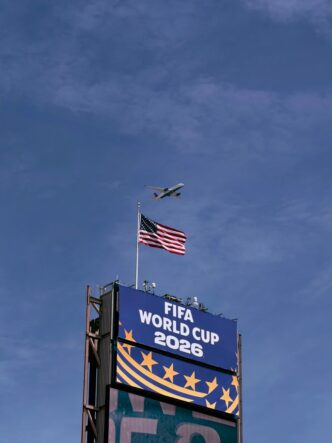
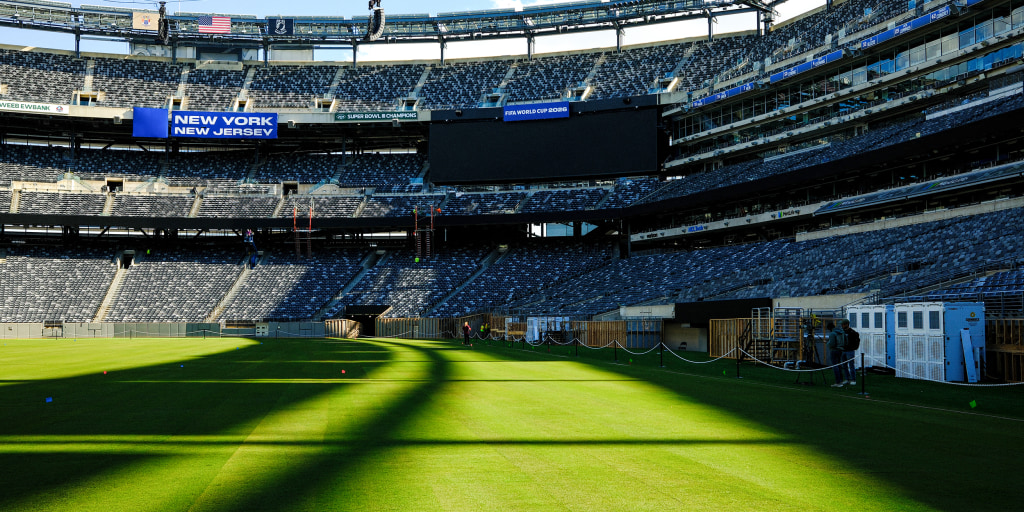
The installation of natural grass at all 16 World Cup host stadiums across the United States, Mexico and Canada has ignited frustration among NFL players, who are questioning why their league refuses to mandate similar playing surfaces despite generating nearly $25 billion in yearly revenue.
FIFA required every venue hosting World Cup matches to feature natural grass, including MetLife Stadium in New Jersey, which will host the tournament final. For NFL players who regularly compete on synthetic turf at these same facilities, the temporary grass conversions represent what the NFL Players Association has called a direct insult to their wellbeing.
Players Voice Frustration Over Surface Standards
New York Giants offensive lineman Jermaine Eluemunor expressed his disappointment with the situation, describing the feeling as difficult to accept. Speaking about his experience playing on different surfaces throughout his career, Eluemunor said the contrast is clear.
“It was a kind of sucky feeling,” Eluemunor said regarding the grass installations for soccer while NFL players continue on turf. “I’m going into year 10, and I can say wholeheartedly that grass feels way better than turf.”
The veteran lineman emphasized that the decision to install grass for the World Cup while NFL players are denied the same treatment sends a troubling message about priorities.
“With MetLife getting grass, obviously it’s cool for FIFA and the World Cup. It’s one of the biggest stages in the world but, at the same time, the NFL as a whole is one of the most profitable businesses in the world, and so you would think that us as players would have a say in the fields that we get to play on,” Eluemunor stated.
Survey Shows Overwhelming Player Preference for Grass
The debate is backed by concrete data. A survey of more than 1,700 NFL players conducted by the NFLPA revealed that 92 percent prefer playing on natural grass rather than synthetic turf. Players cite reduced physical soreness after games on grass as a primary reason for their preference.
The NFLPA issued a strong statement addressing the World Cup grass installations at NFL stadiums, framing the situation as a fundamental fairness issue.
“The temporary installation of natural grass fields for the World Cup is a choice by certain NFL team owners to do for soccer players what they refuse to do for NFL players,” the union stated.
The statement continued: “NFL players — who regularly compete on these fields, help fund these stadiums and whose work makes the league what it is today — deserve the same commitment to quality grass fields.”
For players like Eluemunor, the issue comes down to physical wellbeing. “It always comes back down to how your body feels and how you feel after a game,” he explained.
FIFA Invested Five Years of Research Into Playing Surfaces
The natural grass used for the World Cup is the result of approximately five years of research sponsored by FIFA and conducted by turfgrass experts from Michigan State University and the University of Tennessee.
The research determined that 10 host stadiums would feature cool-season grass, consisting of a mixture of Kentucky bluegrass and perennial ryegrass. The remaining six stadiums will use warm-season grass in the form of hybrid Bermuda.
The grass was grown at sod farms located across all three host countries and transported to the stadiums via refrigerated trucks to maintain optimal conditions.
John Trey Rogers, a turfgrass professor at Michigan State University, was among the experts involved in developing the grass solutions for the tournament.
NFL Cites Challenges in Mandating Natural Grass
Nick Pappas, the NFL’s field director, addressed the league’s position on playing surfaces, citing multiple factors that complicate a universal grass mandate.
According to Pappas, climate conditions, the multi-use nature of NFL stadiums, and the physical style of football all present challenges that differ from soccer requirements.
“It would take quite a commitment,” Pappas said regarding potential grass conversions across the league.
Pappas also expressed uncertainty about whether World Cup grass surfaces would meet NFL standards for football play. “There’s no way to confidently and objectively state that those surfaces would absolutely meet the requirements for NFL,” he stated.
Some NFL Teams Have Already Invested in Grass Solutions
Despite the league’s cautious stance, certain NFL team owners have demonstrated that grass solutions are achievable with sufficient investment.
Miami Dolphins owner Stephen Ross purchased 80 acres of land in Palm Beach County specifically for a sod farm to supply natural grass for the team’s stadium. This investment came after Taylor Swift played three consecutive shows at Hard Rock Stadium in October 2024, highlighting the challenges of maintaining playing surfaces at multi-use venues.
The Las Vegas Raiders took a different approach, investing in a sliding grass field for Allegiant Stadium that allows the natural surface to be moved outdoors when not in use for games.
Additionally, the NFL demonstrated its willingness to spend on premium playing conditions when the league invested millions on a single game at Madrid’s Bernabeu Stadium in 2025. The Giants also played the Carolina Panthers at Allianz Arena in Germany in 2024, further showing the league’s capacity to arrange quality playing surfaces for international games.
What We Know So Far
FIFA mandated natural grass at all 16 World Cup stadiums, requiring significant infrastructure investments at venues that normally feature synthetic surfaces. The research behind these grass installations involved years of scientific study by university experts.
NFL players have made their preferences clear through union surveys, with an overwhelming majority favoring natural grass. The physical toll of playing on synthetic turf is a central concern, with players reporting less soreness after grass games.
The NFL generates nearly $25 billion in yearly revenue, making arguments about cost difficult for players to accept. Some team owners have already invested in grass solutions independently, proving the concept is feasible.
What Happens Next
The World Cup will proceed with all 16 stadiums featuring the required natural grass surfaces, with MetLife Stadium hosting the final match. Following the tournament, the temporary grass installations at NFL stadiums will likely be removed.
The NFLPA continues to advocate for improved playing surfaces, using the World Cup installations as evidence that NFL ownership could provide grass fields if they chose to prioritize player safety and preference.
The contrast between FIFA’s requirements and NFL practices will remain visible throughout the tournament, potentially adding pressure on league leadership and team owners to reconsider their positions on playing surfaces.
Frequently Asked Questions
Why does FIFA require natural grass for the World Cup?
FIFA mandated natural grass at all 16 host stadiums across the U.S., Mexico and Canada as a playing surface requirement for the tournament. The grass emerged from five years of FIFA-sponsored research by experts at Michigan State University and the University of Tennessee.
What percentage of NFL players prefer grass over synthetic turf?
According to an NFLPA survey of more than 1,700 players, 92 percent prefer playing on natural grass rather than synthetic turf. Players cite reduced physical soreness after games as a key factor in their preference.
Why does the NFL use synthetic turf instead of natural grass?
NFL field director Nick Pappas cited climate conditions, the multi-use nature of NFL stadiums, and the physical style of football as factors that complicate mandating natural grass across the league. However, some team owners have independently invested in grass solutions for their venues.
The World Cup grass installations have brought renewed attention to the ongoing debate over NFL playing surfaces, with players and their union pointing to the temporary conversions as proof that natural grass is achievable when ownership prioritizes it. As the tournament unfolds on carefully cultivated grass surfaces, NFL players will continue competing on the synthetic turf that the vast majority say causes them more physical discomfort.