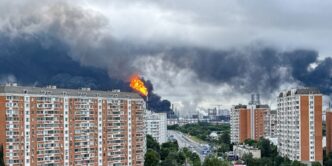
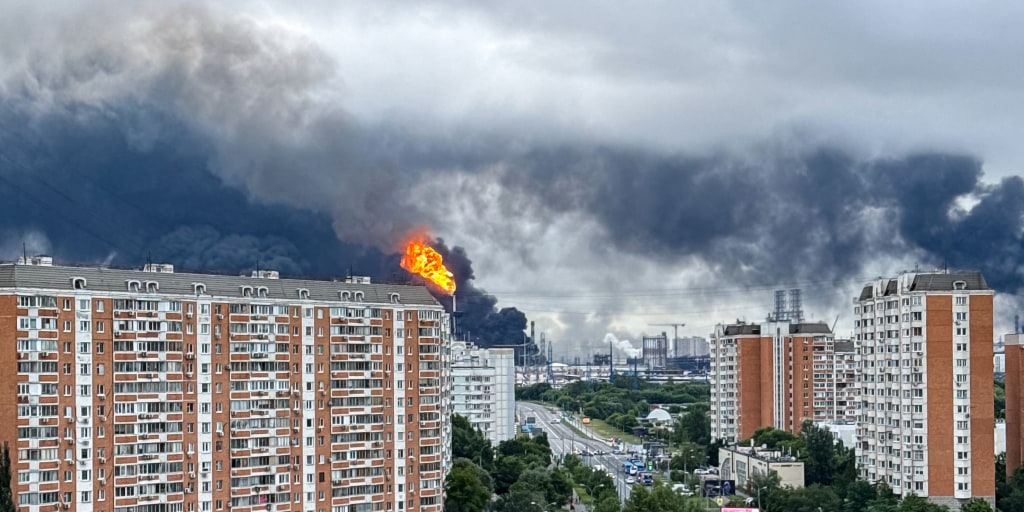
Ukrainian drones struck the Kapotnya oil refinery in Moscow on June 18, 2026, in what officials are describing as the largest aerial attack on the Russian capital since Russia invaded Ukraine more than four years ago. Moscow Mayor Sergei Sobyanin reported that 190 drones were shot down overnight on approach to the city, with several reaching the refinery and causing fires that sent thick black smoke rising over the capital.
The attack marks the second strike on the Kapotnya facility this week, following an initial assault on Tuesday. Located in southeast Moscow, just 10 miles from the Kremlin, the refinery became engulfed in flames visible across the city. The assault prompted temporary shutdowns at Moscow’s major airports Thursday morning and disrupted commercial flights throughout the region.
Main developments
The scale of the overnight operation represents a significant escalation in Ukraine’s drone campaign against Russian territory. According to Moscow Mayor Sergei Sobyanin, Russian air defenses intercepted 190 drones as they approached the capital, though several managed to penetrate the defensive barrier and strike the oil refinery.
The Kapotnya oil refinery, a major energy facility situated in the southeastern part of Moscow, sustained hits that ignited fires across the complex. Thick black smoke was observed rising over the city as emergency responders worked to contain the blaze. An apartment building in Zhukovsky, located near Moscow, was also damaged during the attack.
Ukrainian President Volodymyr Zelenskyy confirmed responsibility for the strike and framed it as retaliation for Russian attacks on Ukrainian civilian targets, including a historic monastery. In a statement, Zelenskyy declared, “This is a fully justified response to Russian attacks on our cities and communities, and another important result of our warriors’ work against facilities that sustain Russia’s war machine.”
The Ukrainian leader also issued a stark warning to Russian citizens, stating, “If Ukraine burns, your Moscow will burn too.”
What we know so far
The attack unfolded overnight into Thursday morning, with waves of Ukrainian drones targeting the Kapotnya oil refinery. Russian authorities confirmed 190 drones were intercepted before reaching their targets, but acknowledged that several successfully struck the refinery complex.
Moscow’s major airports temporarily suspended operations Thursday morning due to the attack. Russia’s aviation authority had announced restrictions on flights by light private aircraft and drones the day before the assault, suggesting authorities may have anticipated increased drone activity.
Ukraine’s sustained drone campaign has caused widespread damage to Russian energy infrastructure over the course of the conflict. A fuel crisis has emerged centered in occupied Crimea as a result of these ongoing attacks on refineries and fuel depots.
Moscow authorities implemented a ban last month prohibiting residents from sharing videos and photos of drone strike results, indicating official concern about the public impact of such imagery.
Ukrainian Foreign Minister Andrii Sybiha responded to reports of confusion among Moscow residents by stating, “One of the most popular questions asked by Muscovites this morning is ‘What is going on?'” He continued, “I can answer. Your country started a war of aggression against ours. For years, it has been killing our people. Now that you know what’s going on, ask Putin when he is planning to end it.”
What happens next
The attack comes at a significant moment in the broader geopolitical landscape surrounding the Russia-Ukraine conflict. President Donald Trump has signaled renewed engagement with efforts to resolve the war following his signing of a peace agreement with Tehran. The G7 summit took place this week, providing a forum for Western leaders to discuss the ongoing conflict.
President Trump’s focus on the Russia-Ukraine situation after completing the Iran peace deal suggests potential diplomatic activity may follow. French President Emmanuel Macron has also been engaged in discussions regarding the conflict.
Ukrainian officials have made clear that drone operations against Russian energy infrastructure will continue as long as Russian forces target Ukrainian cities and civilian areas. The successful penetration of Moscow’s air defenses, even with the majority of drones intercepted, demonstrates Ukraine’s capability to strike targets deep within Russian territory.
Important details
The Kapotnya refinery is located approximately 10 miles from the Kremlin in southeast Moscow, making it one of the closest major industrial targets to the center of Russian government. The proximity of the strikes to the heart of Russian power underscores the reach of Ukrainian drone capabilities.
This was the second attack on the Kapotnya facility in less than a week, with the first strike occurring on Tuesday. The repeated targeting suggests Ukrainian forces have identified the refinery as a priority target in their campaign against Russian energy infrastructure.
Moscow residents experienced significant disruption from the attack, with commercial flights delayed and airports temporarily closed Thursday morning. The aviation restrictions announced by Russian authorities the day before the attack indicate ongoing concerns about aerial threats to the capital region.
The ban on sharing footage of drone strikes, implemented last month, reflects Russian authorities’ attempts to control the narrative around attacks on their territory and prevent the spread of imagery showing damage to infrastructure.
Ukraine has framed the assault as revenge for Russian strikes on Ukrainian targets, specifically mentioning attacks on a historic monastery. This justification continues the pattern of Ukraine describing its drone operations as proportional responses to Russian aggression.
Frequently asked questions
Where is the Kapotnya oil refinery located?
The Kapotnya oil refinery is located in southeast Moscow, approximately 10 miles from the Kremlin. It is a major energy facility that has now been struck twice by Ukrainian drones within a single week.
How many drones were involved in the Moscow attack?
Moscow Mayor Sergei Sobyanin reported that 190 drones were shot down overnight on approach to Moscow. Several drones successfully reached and struck the Kapotnya oil refinery despite the air defense efforts.
Were Moscow airports affected by the drone attack?
Yes, Moscow’s major airports temporarily shut down Thursday morning as a result of the drone attack. Commercial flights were disrupted, and Russia’s aviation authority had announced restrictions on light private aircraft and drone flights the day before the attack.
Why did Ukraine attack the Moscow refinery?
Ukrainian President Volodymyr Zelenskyy described the attack as a justified response to Russian strikes on Ukrainian cities and communities. Ukraine specifically cited Russian attacks on a historic monastery as motivation for the operation.
The attack on the Kapotnya refinery represents the largest drone assault on Moscow since Russia launched its invasion of Ukraine more than four years ago. With 190 drones intercepted and several striking their target, the operation demonstrates the ongoing intensity of Ukrainian efforts to damage Russian energy infrastructure and bring the consequences of the war to the Russian capital.