When most people think of Miami, images of Cuban sandwiches, Little Havana, and Latin music icons like Gloria Estefan and Pitbull come to mind. But artist Calida Rawles is on a mission to remind the world that Miami is also a profoundly Black city with a rich African American heritage that has been systematically erased from public consciousness.
Uncovering Overtown’s Erased Legacy
The Pérez Art Museum Miami commissioned Rawles to create an exhibition specifically designed to connect with the city’s African American community. What began as a site-specific project quickly evolved into something much larger as the artist uncovered layers of hidden history that demanded attention.
“Where do Black people live in Miami, and what is the history of Black people in Miami? I do not readily think of Black people when I think of Miami. I think of Cubans. I think of different minority groups, but I did not think of Black people,” Rawles explained about her initial approach to the project.
Her research led her to Overtown, once a thriving Black neighborhood that served as home to approximately 50,000 residents. This vibrant community boasted countless Black-owned businesses, churches, and schools. However, the construction of Interstate 95 in the 1960s devastated the area through what critics describe as segregation by design.
The Devastating Impact of Urban Renewal
The Federal Highway Act championed by President Dwight Eisenhower resulted in property being seized through eminent domain, with a concrete highway being driven directly through the heart of the Black community. More than 12,000 residents were forcibly relocated, virtually all of them African American. Their businesses, churches, and schools disappeared along with them.
This pattern of destruction through urban renewal occurred in nearly every major American city, representing one of the most devastating and long-lasting examples of systemic racism affecting African American communities nationwide. Rawles found her national story with a distinctly Miami perspective.
- Hampton House Hotel – a historic landmark of Black Miami
- Virginia Key Beach – the segregated beach where Black residents were permitted to swim
- Purvis Young – legendary self-taught artist from Overtown
- Arthur McDuffie – whose death sparked the 1980 Miami riots
- Theodore Gibson Park – community gathering space in Overtown
Art as a Vehicle for Historical Truth
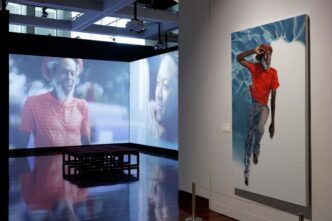
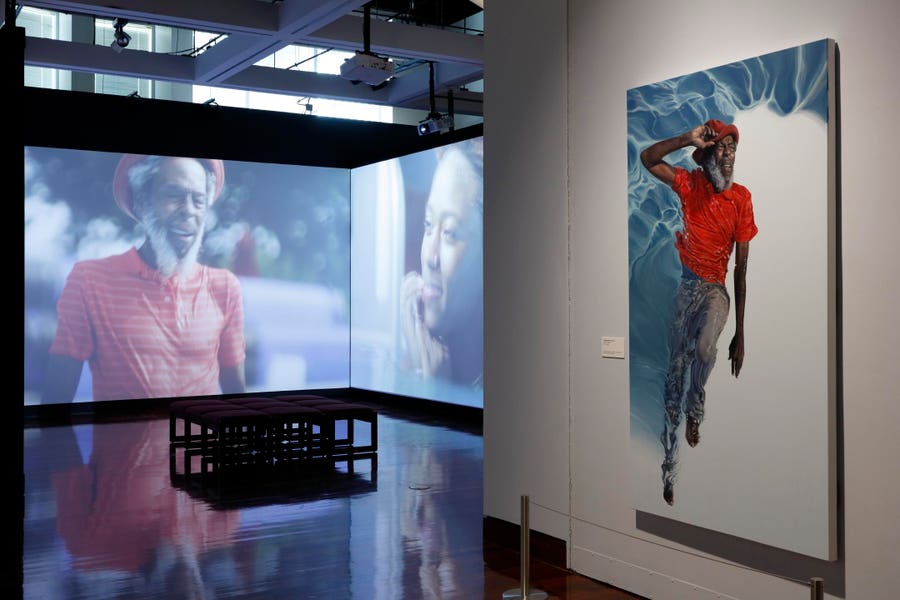
Rawles began her creative process with preliminary photoshoots at Virginia Key Beach and the public pool at Theodore Gibson Park in Overtown. These authentic settings informed the subject matter for her remarkably lifelike paintings, which feature actual community members ranging from a 10-month-old baby to senior citizens.
The resulting exhibition, titled “Away with the Tides,” debuted at PAMM in the summer of 2024 and has since traveled to the Spelman College Museum of Fine Art. The portraits provide powerful representation for those who continue to call Overtown home while capturing the generational shifts the community has experienced over decades of change.
Challenging Official Narratives
City officials have historically attempted to justify the destruction of Overtown by claiming the area was blighted. Rawles firmly rejects this characterization, pointing to evidence that the neighborhood was actually thriving before the highway construction began.
“They always try to say it was blight, but Overtown was thriving. It was just a racial excuse. I was thinking about that, and I wanted to give a visual of Black people are in Miami,” the artist stated regarding her motivations for the project.
Born in 1976, Rawles has established herself as a significant voice in contemporary American art, using her photorealistic painting style to explore themes of Black identity, water, and belonging. Her Miami-focused work represents an important contribution to the ongoing effort to document and preserve African American history in communities where it has been deliberately obscured.
The exhibition serves as both an artistic achievement and a historical document, ensuring that future generations will have access to visual representations of Black Miami’s enduring presence and resilience in the face of systematic erasure.