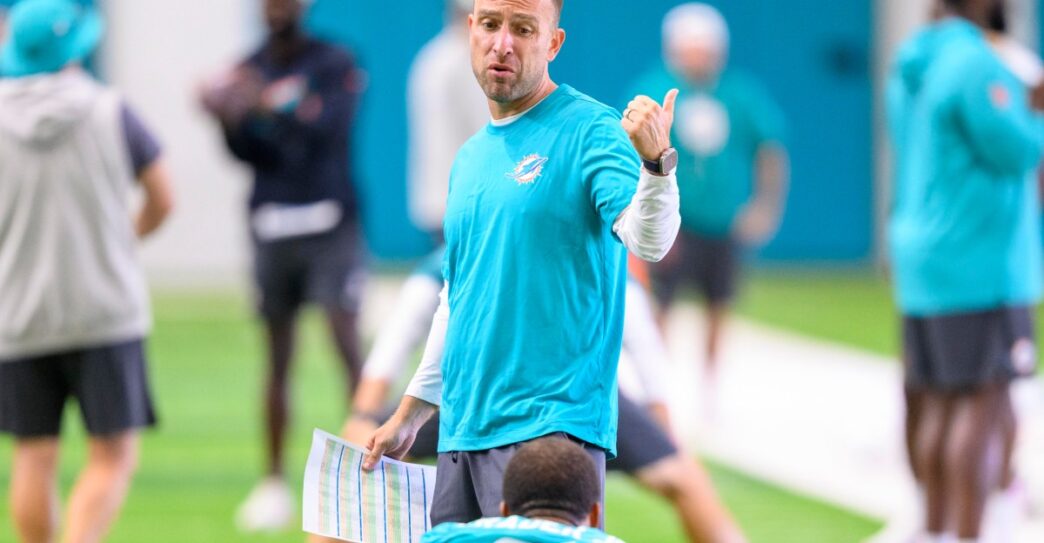
The Miami Dolphins coaching staff has earned a new nickname among fans: Green Bay Packers South. On August 3, 2026, discussions intensified across social media about whether this influx of former Packers personnel will finally help the team overcome their notorious struggles in cold-weather games. For Dolphins fans in the Latin community across the United States, this coaching transformation represents a potential turning point for a franchise that has historically faltered when temperatures drop.
Why Fans Are Calling It Green Bay Packers South
The Miami Dolphins coaching staff has undergone significant changes with multiple former Green Bay Packers coaches and personnel joining the organization. Key figures mentioned by fans include staff members referred to as “Sully” and “Haf,” who bring organizational culture from one of the NFL’s most storied cold-weather franchises.
This transformation has sparked heated debate among the Dolphins faithful. Some see it as a strategic move to import winning mentality from a franchise that thrives in brutal Wisconsin winters. Others question whether any coaching change can truly prepare players who train in South Florida’s tropical heat for sub-freezing conditions.
The Cold-Weather Problem by the Numbers
The statistics paint a concerning picture for Miami. According to fan discussions, the Dolphins have dropped 12 straight games when temperatures fall to 40 degrees or lower. This alarming streak has become a psychological barrier for the team and a source of frustration for supporters who watch their squad dominate in warm conditions only to struggle against division rivals in colder cities during winter months.
“Bringing in leadership and staff with Green Bay roots brings valuable organizational culture from a cold-weather franchise, but I would think it is unlikely to instantly fix our beloved Dolphin’s physical and historical troubles playing in freezing temperatures.”
The scientific reality presents challenges. According to fans familiar with physiology, it takes approximately 2-3 weeks for human bodies to adjust to significant temperature changes. This timeline makes true acclimatization nearly impossible for a team based in hot, humid South Florida that must travel north for crucial late-season games.
Fan Solutions and Suggestions
Dolphins supporters have proposed several creative approaches to address the cold-weather deficit:
- Cranking up air conditioning at home facilities and in the practice dome during later portions of the season
- Incorporating ice baths into training regimens to condition players for temperature shock
- Utilizing modern cold-weather gear designed to be worn comfortably underneath uniforms and pads
- Scouting and drafting players with rugged traits suited for all weather environments
- Developing a tougher mental approach to cold conditions
One fan with military experience noted that as a native Floridian stationed in upstate New York and Germany, he learned that cold-weather success is “definitely a mindset.” He also pointed out that modern technology provides players with excellent warm-weather gear that previous generations simply did not have access to.
Training Camp Highlights Offer Hope
Amid the coaching staff discussions, fans noted encouraging news from training camp. According to reports shared in the community, rookie Jacob Rodriguez, who played college football in Lubbock, Texas, made impressive plays on his first day at camp. His range in coverage was reportedly on full display.
Rodriguez’s experience playing in Lubbock matters because the west Texas city experiences genuinely cold winters, unlike most Florida-based players who rarely encounter freezing temperatures. This type of player fits the mold that the new Green Bay-influenced staff apparently seeks: athletes with experience in varied weather conditions.
What This Means for Dolphins Fans
For the passionate Latino fan base supporting the Dolphins across Florida and beyond, this coaching transformation represents both hope and uncertainty. The AFC East division requires success in cities like Buffalo, New York, and Boston, where winter conditions can be brutal.
Some fans remain optimistic about the upcoming season. One supporter expressed confidence that this team will not struggle when traveling to face division rivals, suggesting players simply need to “dress for success.” Others maintain that the fundamental issue is mental toughness rather than coaching pedigree.
The verdict on whether Green Bay Packers South can deliver results where previous regimes failed will come when temperatures drop and the Dolphins face their cold-weather tests. For now, fans are cautiously hopeful that this infusion of personnel from America’s frozen tundra might finally provide the formula to end that devastating 12-game losing streak in sub-40-degree conditions.
The 2026 NFL season will reveal whether bringing organizational culture from Green Bay translates into wins when the Miami Dolphins must perform in environments far removed from their tropical home base.