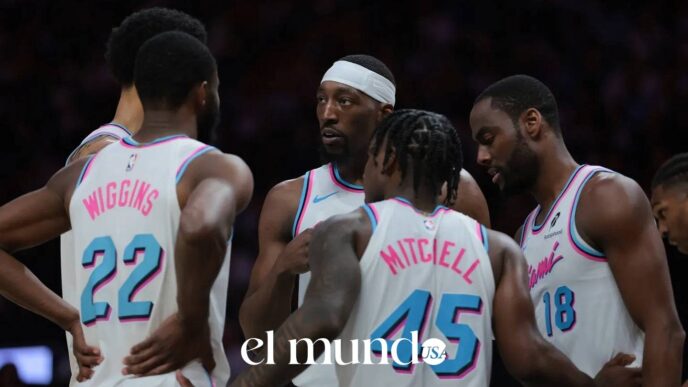
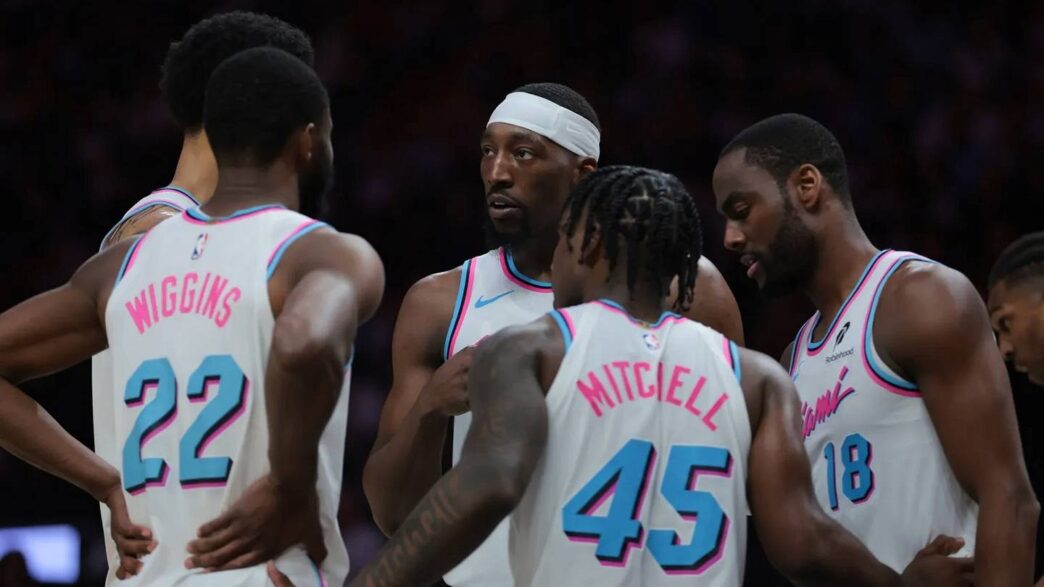
The Miami Heat have assembled a roster designed to dominate inside the paint, but a critical flaw threatens to undermine their championship aspirations. While NBA analysts focus on three-point shooting concerns following the departures of Tyler Herro and Norman Powell, the real problem lies at the free throw line. This overlooked weakness could cost Miami games when margins are razor-thin.
Free Throw Shooting Is the Real Issue
Every offseason discussion about this Heat roster eventually lands on spacing and perimeter shooting. Can they shoot enough threes? Who replaces the scoring that Herro and Powell provided? These are valid concerns, but they miss the bigger picture.
The free throw is the one possession in basketball where the only variable is the shooter. No defender, no help rotation, just a player and the rim. A trip to the line with two attempts is worth approximately 1.56 points for a league-average shooter. For a team shooting 70 percent, that value drops to 1.40 points.
That gap sounds insignificant until you spread it across an entire game. Over roughly 25 attempts per game, the difference between a 70 percent free throw team and an 80 percent free throw team is about two and a half points every night. That margin decides a stunning number of NBA games and has swung entire playoff series.
Giannis Antetokounmpo’s Free Throw Struggles
Giannis Antetokounmpo is one of the most relentless downhill forces the league has ever produced. His ability to attack the rim generates constant trips to the charity stripe. The problem is what happens once he gets there.
The two-time MVP shot just 65.0 percent from the free throw line last season. His career mark sits at 69.1 percent, which remains below league average. What makes this particularly concerning is his volume.
Giannis made 232 free throws in just 36 games last season, working out to roughly ten attempts per night. At that volume, the difference between his 65 percent conversion rate and league average costs Miami approximately 1.3 points per game. Across a full season, that translates to more than a hundred points left on the floor by one player at an unguarded shot.
Bam Adebayo and the Supporting Cast
Bam Adebayo absorbs a heavy load of contact in Miami’s offense. He operates in the post and at the elbow, drawing fouls consistently. However, his career free throw percentage of 75.9 percent is merely respectable rather than reliable in clutch situations.
Adebayo isn’t the player you want at the stripe with your season on the line. He’s competent but not a weapon from the charity stripe the way elite free throw shooters can be.
Andrew Wiggins and Pelle Larsson both attack closeouts by design within Miami’s offensive system. Larsson shot just under 80 percent from the line last season, which is genuinely good. However, his free throw rate sat in the 22nd percentile, meaning he simply doesn’t get there often enough to make an impact.
The Roster Construction Problem
Miami’s offensive architecture this summer was engineered to pressure the rim. That strategy produces fouls and generates free throw attempts. Getting to the line was never going to be the problem for this team.
Davion Mitchell’s free throw rate sits in a similar neighborhood to Larsson’s, but he converts under 70 percent. That’s a significant liability for a player who should be attacking the basket.
Bobby Portis also converted around 70 percent while his attempt volume sat in the bottom fifth of the league. He doesn’t get to the line often, and when he does, he’s not reliable.
The pattern becomes clear when examining the entire roster. The players who will get fouled most often are not considered great free throw shooters. Meanwhile, the players who can shoot struggle to draw fouls.
Who Can Miami Trust at the Line?
Only four players on the current roster shoot above 80 percent from the free throw line. This group offers limited solutions to Miami’s dilemma.
Ryan Conwell is a rookie, bringing uncertainty about how his percentages will translate to the NBA level. Dru Smith’s primary value comes on the defensive end of the floor, limiting his offensive minutes.
The other two reliable free throw shooters are Tim Hardaway Jr. and Simone Fontecchio, both of whom are perimeter players who won’t spend much time in the paint. They draw fouls infrequently because their games are built around shooting from distance rather than attacking the rim.
Why This Is Harder to Solve Than Spacing
Three-point shooting concerns can be addressed through roster moves and offensive adjustments. You can add shooters, create better looks through play design, and space the floor differently.
Free throw shooting is fundamentally different. It’s a skill that develops slowly and often plateaus. Players either can shoot free throws or they can’t, and dramatic improvement is rare at the NBA level.
Giannis has worked on his free throw shooting throughout his career. His mechanics have evolved, but his percentages have remained stubbornly similar. Expecting a major jump at this stage would be optimistic rather than realistic.
The Impact in Playoff Games
The stakes of this weakness escalate dramatically in the postseason. Playoff games are decided by smaller margins, and opponents employ intentional fouling strategies against poor free throw shooters.
Teams will put Giannis on the line late in close games, trusting that his 65 percent conversion rate gives them better odds than allowing him to score at the rim. This tactic worked against him in Milwaukee and will follow him to Miami.
Two and a half points per game across a seven-game series is approximately 17 or 18 total points. That’s enough to flip multiple games and potentially an entire series outcome.
What Heat Fans Should Know
Miami hasn’t played a game yet with this roster configuration. The team has yet to fill its final roster spots, and a move or two could make them look meaningfully different by October.
Giannis remains a two-time MVP and the single biggest reason Miami is a contender at all. His presence transforms the franchise’s ceiling. But an honest evaluation reveals that his free throw shooting hasn’t been as efficient as it was earlier in his career.
For the Latin community following the Heat, this analysis provides crucial context for the season ahead. Miami will be exciting to watch as they attack the rim relentlessly. The question is whether they can convert when opponents send them to the line.
What is Miami Heat’s biggest weakness heading into the 2026-27 season?
According to analysis, Miami’s biggest weakness is free throw shooting rather than three-point shooting. The players who will get fouled most often, including Giannis Antetokounmpo, are not reliable free throw shooters.
How much did Giannis Antetokounmpo shoot from the free throw line last season?
Giannis shot 65.0 percent from the free throw line last season, below his career average of 69.1 percent. He made 232 free throws in just 36 games, averaging roughly ten attempts per night.
Why is free throw shooting harder to fix than three-point shooting?
Three-point shooting can be addressed through roster moves and offensive adjustments. Free throw shooting is a skill that develops slowly and often plateaus, making dramatic improvement rare at the NBA level.