Miami Hurricanes football represents one of the most dominant dynasties in college sports history, and the coaches who built that legacy deserve proper recognition. On August 9, 2026, fans continue to debate which Miami football coaches left the greatest mark on the program that produced countless NFL stars and captured multiple national championships.
From the architect who laid the foundation to the brilliant tactician who perfected the system, these Miami football coaches each contributed something unique to the Hurricanes’ storied tradition. Understanding their individual legacies helps explain why Miami remains synonymous with championship-caliber football decades after their glory years.
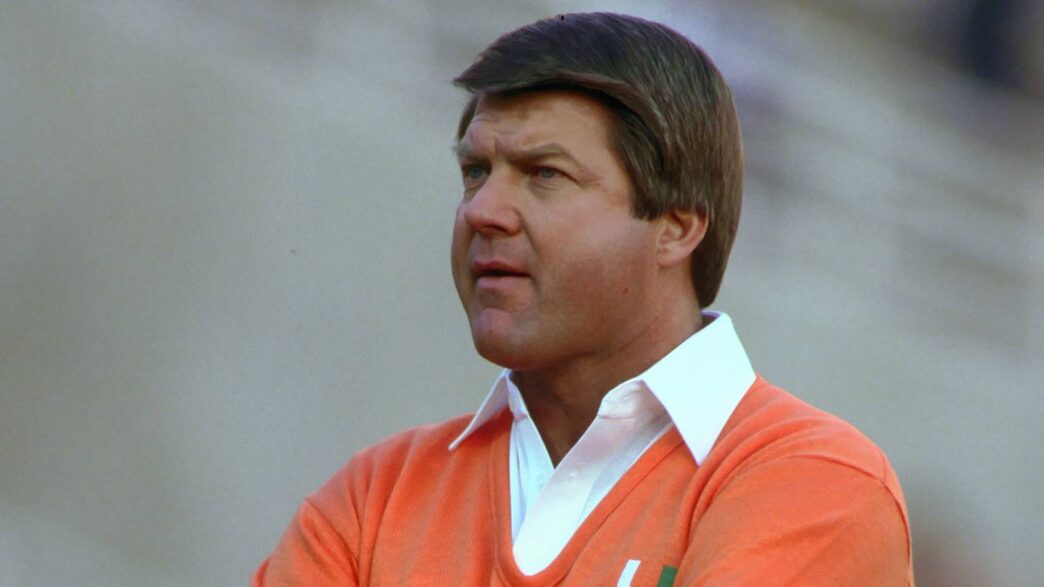
Jimmy Johnson: The Perfect Fit for Miami Football
When discussing Miami Hurricanes football, one name stands above all others: Jimmy Johnson. Despite being born in Texas and spending most of his early coaching career in the Mid-South region, Johnson embodied everything Miami represented during the program’s golden era.
The hair, the swagger, the unshakeable confidence—Johnson was Miami to the core. He built the machine that would dominate college football throughout the late 1980s and into the 1990s. His 1987 championship team is often considered the greatest of all Miami title teams and arguably the best squad of that entire decade.
Most Miami fans still credit Johnson for the 1989 championship even though he departed for the NFL after the 1988 season. The players he recruited and the culture he established carried the program forward. Johnson made history by becoming the first coach to win both a national championship and a Super Bowl.
Howard Schnellenberger: The Man Who Built the Foundation
While Jimmy Johnson perfected Miami football, it was Howard Schnellenberger who constructed its very foundation. Schnellenberger recognized something that would revolutionize college football recruiting: the incredible talent pool sitting right in South Florida’s backyard.
He worked tirelessly to keep the best local players home, creating a pipeline that would fuel Miami’s success for decades. The 1984 Orange Bowl victory over Nebraska stands as one of the greatest college football games ever played, cementing Schnellenberger’s place in program history.
Schnellenberger departed after winning the championship, lured by the promise of a USFL team in Miami that never materialized. He later admitted he should have stayed with the Hurricanes. Given his restless nature as a coaching vagabond, however, he likely would have moved on eventually regardless.
Butch Davis: The Uncrowned Champion of Miami Football
Butch Davis holds a unique position among Miami football coaches. He’s the only coach on this championship list who didn’t technically win a title—yet most knowledgeable fans give him credit for the 2001 championship team because he recruited nearly all those players.
Davis faced an enormous challenge when he took over the program. Sanctions, reduced scholarships, and negative perception surrounded Miami following the Dennis Erickson years. Despite these obstacles, Davis produced remarkable results with only one truly bad season during his tenure.
In his other four years, Davis won eight or more games each season and kept the Hurricanes ranked in the top 25. This consistency while rebuilding demonstrates his exceptional coaching ability. The question that haunts Miami fans: if Davis hadn’t left for the NFL immediately, would the Hurricanes have won championships in 2002 and 2003? A second dynasty seemed possible.
Read more: College Football Recruiting: How Florida Dominates the Talent Pool
Dennis Erickson: The Offensive Visionary with a Complicated Legacy
How does a coach with a 63-9 record and two championships finish fourth on any list? That’s the paradox of Dennis Erickson at Miami. His accomplishments are undeniable, yet his legacy remains complicated among Hurricanes faithful.
Erickson deserves tremendous credit as an offensive innovator. His decision to change Miami’s offense to an 11 personnel formation transformed the Hurricanes into one of the toughest teams to defend in the entire country. In terms of pure Xs and Os, Erickson might be the most brilliant tactician among all Miami football coaches.
However, serious problems emerged during his tenure. Erickson essentially stopped recruiting around 1992, and when the NCAA began investigating the program, he quickly departed. Some embarrassing losses also tarnish his record, including a 4-13 drubbing by Alabama in the 1993 Sugar Bowl and a 29-0 shutout against Arizona in the 1994 Fiesta Bowl.
Unlike the coaches above him on this list, Erickson didn’t leave the program better than he found it. That distinction matters when evaluating championship coaches.
Larry Coker: Handed a Ferrari, Asked Not to Crash
Larry Coker holds the unfortunate distinction of being the only coach on this list who was actually fired. He was a genuinely nice person who inherited an incredibly talented roster assembled by Butch Davis—essentially handed a Ferrari and told simply not to crash it.
Coker didn’t crash it, at least not initially. The Hurricanes captured a national title in 2001 with the players Davis had recruited. However, questions persisted about whether Coker maximized the potential of that extraordinarily talented group.
The decline came swiftly and painfully. Coker lost 12 games in his final three seasons at Miami. By the time the 2006 season arrived, the Hurricanes had become a shell of their former dominant selves. The dynasty had officially ended.
What Miami Football Coaches Mean to the Latino Community
For the Latino community in South Florida and across the United States, Miami Hurricanes football represents more than just sports. The program has provided opportunities for countless Hispanic players to showcase their talents on a national stage.
The coaches who built this dynasty created pathways for young athletes from diverse backgrounds to pursue their dreams. Miami’s commitment to recruiting local talent, established by Schnellenberger and continued by his successors, benefited numerous Latino families throughout South Florida.
Understanding this history helps fans appreciate why Miami football coaches matter beyond wins and losses. They shaped a program that became a symbol of excellence and opportunity for generations of players and fans alike.
How the Championship Legacy Continues Today
The foundation built by these legendary Miami football coaches continues to influence the program. Current coaching staffs study the methods that made Miami dominant during those championship years.
Recruiting remains centered on the same South Florida talent base that Schnellenberger first identified decades ago. The swagger and confidence that Johnson personified still defines what it means to be a Hurricane.
As Miami works to recapture its former glory, the lessons from these championship eras provide the blueprint. The program produced multiple national championships by combining elite local recruiting, innovative offensive schemes, and coaches who understood the unique culture of South Florida football.
Experiencing Miami Football History
For fans wanting to connect with this championship legacy, several destinations offer meaningful experiences. Hard Rock Stadium hosts current Hurricanes games and provides opportunities to witness the next chapter of Miami football history.
The University of Miami campus features memorabilia and tributes to the championship teams and coaches who built the dynasty. Dedicated fans can explore the facilities where these legendary coaches once worked to develop championship rosters.
Local sports bars and restaurants throughout Miami proudly display photos and memorabilia from the glory years. These establishments serve as gathering places for the passionate Hurricanes fan community that spans multiple generations.
Who is considered the greatest Miami Hurricanes football coach?
Jimmy Johnson is widely regarded as the greatest Miami football coach. He built the championship machine, won the 1987 national title with what many consider Miami’s best team ever, and became the first coach to win both a national championship and Super Bowl.
Did Butch Davis win a championship at Miami?
Butch Davis technically did not win a championship as head coach, but he recruited nearly all the players who won the 2001 national title under Larry Coker. Most fans credit Davis for building that championship team.
What was Dennis Erickson’s record at Miami?
Dennis Erickson compiled an impressive 63-9 record at Miami and won two national championships. Despite this success, his legacy is complicated due to recruiting failures after 1992 and his departure when NCAA investigations began.
Why was Larry Coker fired from Miami?
Larry Coker was fired after losing 12 games in his final three seasons at Miami. By the 2006 season, the Hurricanes had declined significantly from their championship-caliber status under his leadership.