
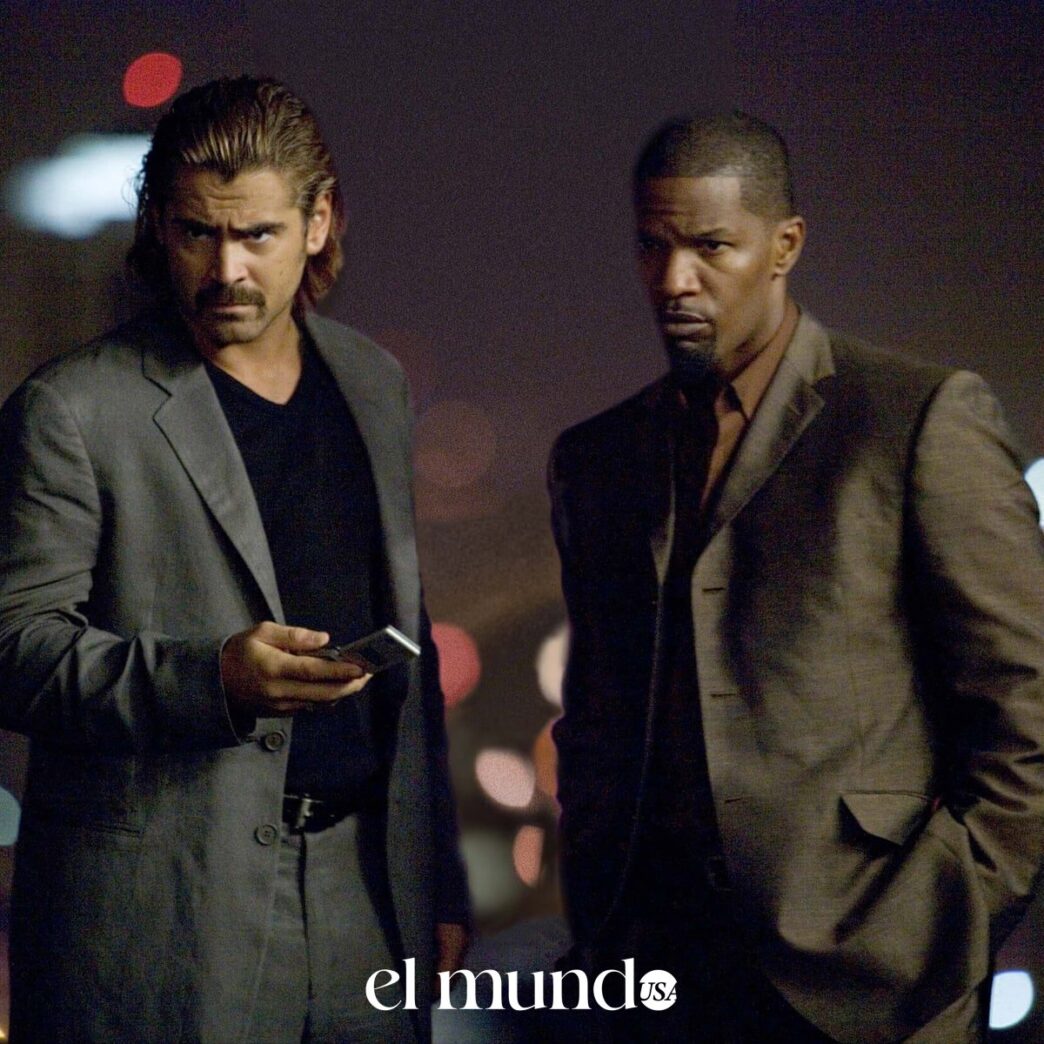
The Miami Vice film directed by Michael Mann has experienced a remarkable cultural reassessment 20 years after its original 2006 theatrical release. What initially received lukewarm responses from audiences and critics has transformed into what many now call a “demented masterwork” and “genius” achievement in modern cinema.
The Miami Vice film starred Colin Farrell as Sonny Crockett and Jamie Foxx as Ricardo Tubbs, the iconic Miami detectives originally portrayed in the beloved 1980s television series. However, Mann deliberately crafted something entirely different from the pastel-soaked original that defined Reagan-era America.
Mann’s Transformation from Television to Cinema
Michael Mann served as executive producer and show runner on the original Miami Vice television series, which became an era-defining cultural phenomenon. The show tapped into the 1980s zeitgeist with its distinctive visual style featuring pastels, neon lights, shoulder pads, and leather holsters.
When Mann returned to the material for his 2006 film adaptation, he made the bold decision to ruthlessly chart his own course. Gone were the bright colors and flashy aesthetics that audiences remembered fondly. In their place, Mann introduced shadows, grit, new-age surveillance technology, and sniper rifles capable of graphic violence.
This jarring transformation initially alienated viewers who expected nostalgic recreation. The Miami Vice film deliberately avoided the buddy cop banter that characterized Crockett and Tubbs’ relationship in the original series, instead presenting a more somber and intense dynamic between Farrell and Foxx.
A Post-9/11 Crime Drama Reflection
The Miami Vice film captured the mood of a fundamentally changed America. Rather than simply updating the 1980s aesthetic, Mann created a time capsule of the post-9/11 world with its heightened anxieties and global interconnectedness.
Visual markers of the mid-2000s permeate the film, from flip phones to Linkin Park on the soundtrack. The international drugs trafficking plot takes viewers beyond Miami to locations including Haiti, Paraguay, and Cuba, reflecting the increasingly global nature of crime and law enforcement.
The narrative structure itself mirrors this edgier sensibility. Mann’s decision to launch the story in medias res without exposition or the comfortable setup audiences expected demonstrated his commitment to uncompromising filmmaking over commercial safety.
Revolutionary Digital Cinematography
Perhaps the most significant aspect of the Miami Vice film was Mann’s pioneering use of nascent HD cameras. This technical choice produced a distinctly digital aesthetic that stripped away traditional cinematic glamour, presenting a raw and immediate visual experience.
The fuzzy night-time shots and confrontationally detailed human faces initially startled audiences accustomed to the polished sheen of conventional Hollywood blockbusters. Mann essentially removed the comfortable barrier between viewer and subject, creating unprecedented intimacy with his characters.
What seemed startling in 2006 now appears miraculous to contemporary eyes. The film features land, sea, and air action spectacles captured with seemingly infinite depth of field. Lightning-lashed nocturnal cityscapes appear with clarity rivaling the naked eye.
An Intoxicating Sensory Experience
The high-definition detail throughout the Miami Vice film creates an immersive quality that transcends typical action cinema. Vehicles, people, and places emerge with visceral clarity that makes audiences feel present within the world Mann constructed.
Critics and fans now describe the experience as intoxicating, with viewers sensing the characters’ emotions and environments in ways that conventional cinematography could not achieve. The famous scene where characters share mojitos exemplifies this sensory engagement that the film delivers throughout its runtime.
Gong Li portrays Isabella, a cartel middle manager whose presence adds complexity to the international criminal underworld the film explores. Her performance demonstrates Mann’s commitment to populating his Miami Vice with nuanced characterizations rather than simple villains.
Cultural Reassessment and Legacy
The journey of the Miami Vice film from dismissed summer blockbuster to celebrated masterpiece offers lessons about how audiences process ambitious cinema. Mann’s refusal to deliver expected nostalgia ultimately produced something far more valuable: a genuine artistic statement.
Contemporary assessments place the Miami Vice film alongside Mann’s other acclaimed works including Heat and Collateral. The fervency of the film’s modern fandom rivals that of any project in the director’s celebrated career.
For the Latin community in the United States, the film’s portrayal of Miami and its connections to Latin America through Cuba, Haiti, and Paraguay presents a complex vision of hemispheric interconnection. The criminal enterprises depicted may be fictional, but the geographic and cultural relationships reflect real dynamics.
The Miami Vice film demonstrates that commercial entertainment can simultaneously function as artistic experimentation. Mann’s willingness to alienate audiences expecting comfortable nostalgia ultimately produced a work that rewards patient engagement two decades later.
Streaming services and home video platforms have facilitated the film’s reassessment, allowing new audiences to discover what 2006 viewers initially rejected. The Miami Vice film stands as testament to how initial reception rarely determines lasting cultural significance.
For viewers interested in understanding the evolution of digital filmmaking, crime drama aesthetics, and post-9/11 American cinema, Mann’s Miami Vice provides essential viewing. The film captures a specific moment in both technological and cultural history while transcending those limitations through sheer artistic ambition.
Why did critics change their opinion about the Miami Vice film?
Critics initially found the 2006 film jarringly different from the beloved 1980s television series. Over 20 years, audiences have come to appreciate Michael Mann’s deliberate artistic choices, including his pioneering HD camera work and post-9/11 thematic elements. The film is now considered a “genius” achievement and “demented masterwork.”
How is the Miami Vice film different from the original TV series?
The Miami Vice film replaced the television series’ pastels, neon, shoulder pads, and leather holsters with shadows, grit, and surveillance technology. Mann eliminated the buddy cop banter and added an international scope with scenes in Haiti, Paraguay, and Cuba.
What made the cinematography in Miami Vice revolutionary?
Michael Mann shot the Miami Vice film using nascent HD cameras, creating a distinctly digital aesthetic with fuzzy night-time shots and detailed human faces. This technique stripped away traditional Hollywood glamour and produced infinite depth of field in action sequences.
📘 Follow El Mundo USA on our social networks: Facebook | Twitter