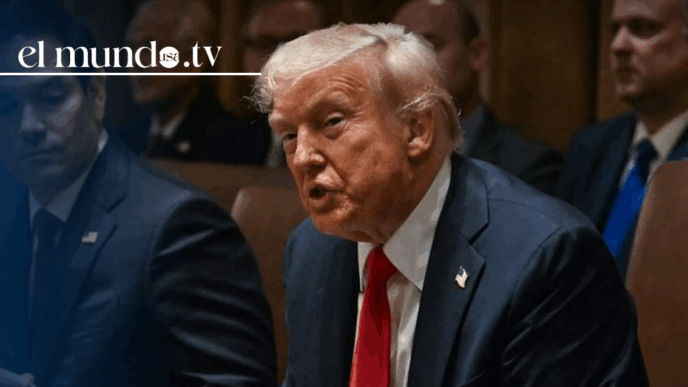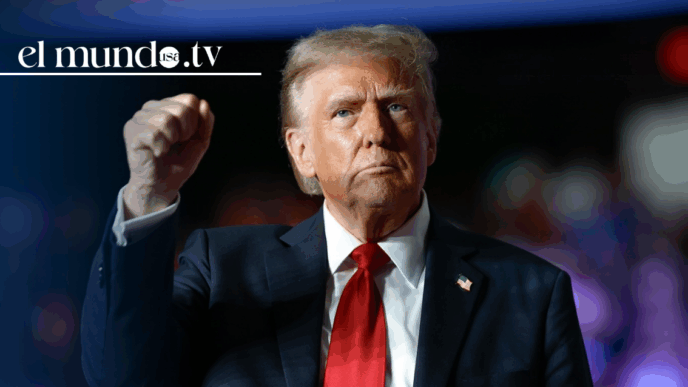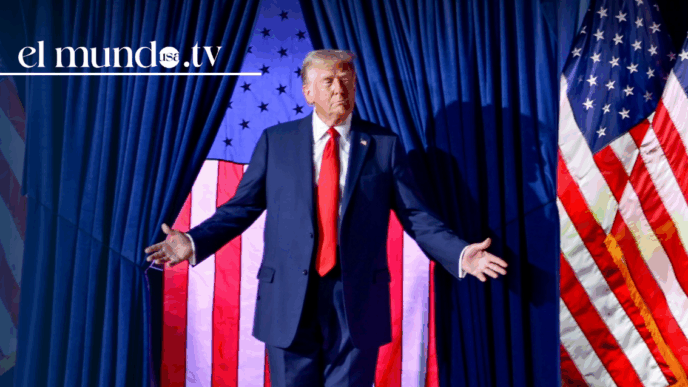
The U.S. President Donald Trump rebranded the Monroe Doctrine during a recent interview with Fox News host Sean Hannity. The policy is now called the “Donroe Doctrine.”
When prompted about the concept, Trump said, “It was the Monroe Doctrine, but now they call it the Donroe Doctrine,” describing it as a form of security for the Western Hemisphere under U.S. leadership.
ALSO READ: Macron accuses the United States of breaking with its allies and challenging the international order
Donald Trump renames the Monroe Doctrine
Trump characterized the doctrine as a regional protection framework, calling it “a kind of security for this part of the world,” and added, “Yes, it’s pretty simple.” He directly tied this interpretation to domestic concerns, particularly migration and drug trafficking, stating that the United States does not want drugs or “bad people” entering the country.
He further linked the doctrine to his border policies, asserting that no one is allowed to enter the United States unless they do so legally.
The remarks reflect a broader political message. By renaming the Doctrine Monroe, Donald Trump reframed a long-standing foreign policy principle as a personalized governing concept.
Under this framing, U.S. influence in Latin America is presented as an extension of domestic security. The doctrine is no longer invoked primarily as a historical guideline, but as a flexible argument to legitimize pressure, control, and presence in the region, anchored in claims of order and protection.
ALSO READ: Trump Orders U.S. Withdrawal from 66 International Organizations
What Is the Monroe Doctrine?
The Monroe Doctrine was introduced in 1823 by U.S. President James Monroe, declaring that the Western Hemisphere was closed to further European colonization and that any interference by external powers would be viewed as a threat to U.S. security. In return, the United States pledged not to involve itself in European conflicts. Over time, the doctrine became a foundational element of U.S. foreign policy toward Latin America.
Throughout the 20th century, the Monroe Doctrine was repeatedly reinterpreted to justify U.S. political, economic, and military involvement in the region. Critics have argued that it enabled interventionism, while supporters have framed it as a mechanism for regional stability. Trump’s reference to a “Donroe Doctrine” signals another reinterpretation, shifting the doctrine from a historical policy principle into a personalized framework aligned with contemporary security and border priorities.