The Federal Reserve held interest rates steady on Wednesday, June 17, 2026, marking Chairman Kevin Warsh’s first rate-setting meeting as the central bank grapples with persistently high inflation and elevated oil prices. The decision came as a unanimous vote, a notable contrast to the previous meeting that saw four dissents.
Warsh acknowledged the financial strain facing American households, stating that “persistently high prices are a burden for the American people.” The decision arrives amid wholesale business inflation surpassing 6 percent in May and consumer inflation rising above 4 percent, driven largely by an energy shock attributed to the conflict in Iran.
Main Developments From the Fed Meeting
The Federal Reserve released its updated economic projections alongside the rate decision, revealing expectations for a 0.25 percent rate hike in 2026 followed by equal cuts in 2027. The central bank also reduced its economic growth projections from 2.4 percent to 2.2 percent.
Oil prices have climbed 30 percent since the start of 2026, contributing significantly to the inflationary pressures facing the economy. Core inflation rose to 2.9 percent in May, though the Fed projects it will settle at 2.5 percent through next year.
In a departure from his predecessors, Warsh did not submit his own economic projection, with only 18 of 19 Fed policymakers providing their forecasts. When asked about this decision, Warsh explained, “I did not submit a dot. For me it’s not helpful.”
The Fed’s official statement was considerably more concise than under former Chairman Jerome Powell. The June statement contained just 130 words, compared to 341 words in Powell’s final meeting on April 29.
What We Know So Far
The Fed statement characterized current conditions by noting that “economic activity is expanding at a solid pace despite elevated uncertainty that owes, in part, to the conflict in the Middle East.” The central bank also indicated that “job gains have kept pace with the workforce.”
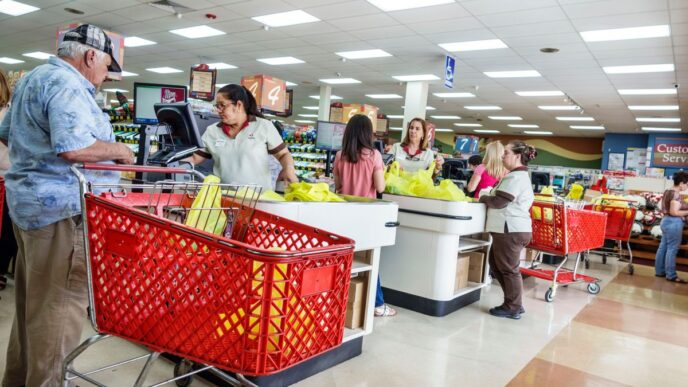
Addressing how the Fed can help Americans struggling with high prices, Warsh offered a candid assessment: “If I saw somebody in the grocery store, what I would say to them is that we cannot have a very significant effect on particular prices.” He added that the Fed’s role is “to make sure that those changes in oil or beef or eggs or milk don’t broaden in the economy.”
Warsh committed to the Fed’s core mission, stating, “That’s our commitment, and we’re going to deliver on it,” and affirmed that “the committee will deliver price stability.”
The new chairman announced the creation of five task forces to review Fed communications and monetary policy, signaling potential changes to how the central bank operates and communicates with the public.
Market Reaction to the Fed Decision
Financial markets responded negatively to the Fed meeting. The S&P 500 closed down 1.2 percent, while the Nasdaq Composite fell 1.3 percent. The Dow slid 506 points, and the 10-year Treasury yield rose to nearly 4.5 percent by 4 p.m. ET.
Traders are now projecting over a 90 percent chance of a rate hike by October, reflecting concerns about persistent inflation and the Fed’s commitment to addressing rising prices.
Evercore analyst Krishna Guha commented on the implications of the meeting: “The risk of a rate hike has increased significantly, as has the potential timeline for a hike. July still looks too soon but not now inconceivable and September must be in play if the next few inflation prints are unfavorable.”
Guha added that “markets will have to get used to a difficult transition to the new Fed era.”
What Happens Next
The Fed’s updated projections suggest a potential rate hike of 0.25 percent could come later in 2026, followed by equivalent cuts in 2027. However, the exact timing remains uncertain and will depend heavily on upcoming inflation data.
The five task forces announced by Warsh will begin reviewing Fed communications and monetary policy, though specific details about their scope and timeline have not been provided.
President Donald Trump commented on the Fed’s new leadership, saying, “It’s so unusual, but we have a very good guy over there now, so I’m guided by what he wants.”
Important Details About Inflation and the Economy
The current inflation picture shows wholesale business inflation exceeding 6 percent in May, with consumer inflation running above 4 percent. Core inflation, which excludes volatile food and energy prices, reached 2.9 percent in May.
The energy shock from the Iran conflict has pushed oil prices up by 30 percent since January 2026, creating significant pressure on household budgets and business costs across the economy.
The Fed’s revised economic growth forecast of 2.2 percent represents a reduction from the previous 2.4 percent projection, indicating that policymakers expect slower expansion amid the inflationary environment.
A New Era at the Federal Reserve
Warsh’s approach appears to differ from his predecessor in several notable ways. His dramatically shorter statement, decision not to submit personal economic projections, and announcement of task forces suggest a potential shift in Fed culture and communication.
When pressed on certain questions during his press conference, Warsh responded briefly with “I don’t have anything for you” and “all right, whatever,” marking a different tone from the more detailed explanations that characterized Powell’s tenure.
One observer described the changes as “hard to believe,” reflecting the significant departure from previous Fed practices.
Frequently Asked Questions
Did the Federal Reserve raise interest rates in June 2026?
No. The Federal Reserve voted unanimously to hold interest rates steady at Chairman Kevin Warsh’s first rate-setting meeting on June 17, 2026.
What is causing high inflation in 2026?
According to the Fed, the conflict in Iran has created an energy shock that has pushed oil prices up 30 percent since the start of 2026, contributing to wholesale inflation above 6 percent and consumer inflation above 4 percent.
Will the Fed raise interest rates later in 2026?
Traders are projecting over a 90 percent chance of a rate hike by October 2026. The Fed’s own projections anticipate a 0.25 percent rate increase sometime in 2026, though the exact timing will depend on future inflation data.
Who is Kevin Warsh?
Kevin Warsh is the new Chairman of the Federal Reserve, appointed by President Donald Trump. The June 17, 2026, meeting was his first as chairman. He previously served as a Fed governor.
How did markets react to the Fed decision?
Markets sold off following the Fed meeting. The S&P 500 fell 1.2 percent, the Nasdaq dropped 1.3 percent, and the Dow declined 506 points. The 10-year Treasury yield rose to nearly 4.5 percent.
The Federal Reserve’s decision to hold rates steady while signaling potential future hikes reflects the challenging balance policymakers face between supporting economic growth and controlling inflation. With core inflation at 2.9 percent and oil prices elevated, markets and households alike will be watching closely for the Fed’s next moves under Chairman Warsh’s leadership.