

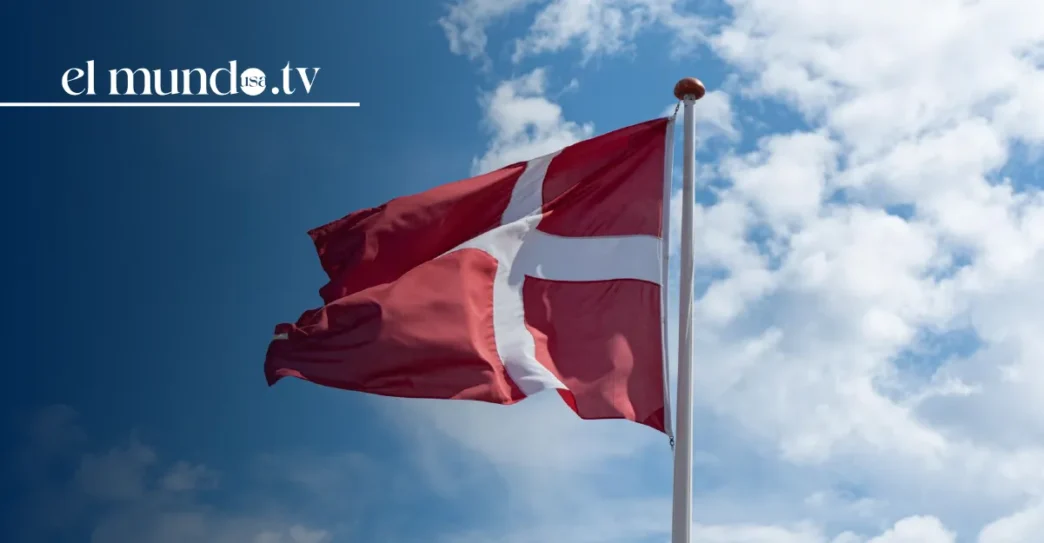
For the first time, Denmark has identified the United States as a potential security concern in an annual report issued by one of its intelligence agencies, highlighting increasing strains in the transatlantic alliance between Europe and Washington.
The report, compiled by the Danish Defense Intelligence Service (DDIS), warns that the United States “uses economic power, including threats of high tariffs, to enforce its will and no longer rules out the use of military force, even against allies.” This assessment is part of a broader analysis noting that great powers “increasingly prioritize their own interests and use force to achieve their objectives.”
READ ALSO: The United States transfers 14 prisoners convicted of federal crimes to Mexico
CNN reported reaching out to the U.S. Embassy in Copenhagen and the Office of the Director of National Intelligence in Washington for comment, but no response has been received so far.
The report also highlights significant strategic threats from Russia and China, as well as global instability stemming from China’s rise and the consequent shift in international power. Specifically, it notes that “the military threat from Russia to NATO will increase,” a concern that weighs heavily on Denmark due to uncertainty about the United States’ role as a guarantor of European security.
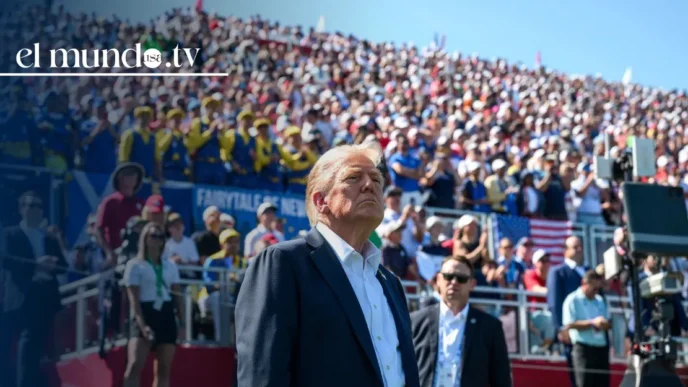
The document also references an episode that strained the Denmark-U.S. relationship earlier this year, when former President Donald Trump expressed interest in acquiring Greenland, a resource-rich, strategically important Arctic island that is legally part of the Danish kingdom. Although Trump has not revisited the proposal in recent months, the announcement demonstrated the U.S. willingness to prioritize its own interests even with long-standing European partners.
For decades, the United States and Denmark maintained a close relationship within the NATO framework, particularly since the end of World War II. However, the recent Danish report underscores that, in a global context where great powers seek to consolidate influence, European security may increasingly depend on the ability of nations to address threats independently—even those posed by traditional allies.