


The United States announced a $2 billion commitment for the United Nations’ (UN) humanitarian aid in 2026. The news comes amid significant reductions in U.S. foreign assistance and a call from the U.S. government for UN agencies to “adapt, shrink, or die” within the context of budgetary constraints.
New Commitment Amid Cuts
The U.S. Department of State, represented in Geneva, stated that this contribution forms a general fund from which money will be distributed to UN agencies and priorities.
Although this figure is lower compared to amounts contributed in recent years—which in some periods exceeded $17 billion annually—the White House considers it an important contribution to maintaining the United States’ status as the world’s leading humanitarian donor.
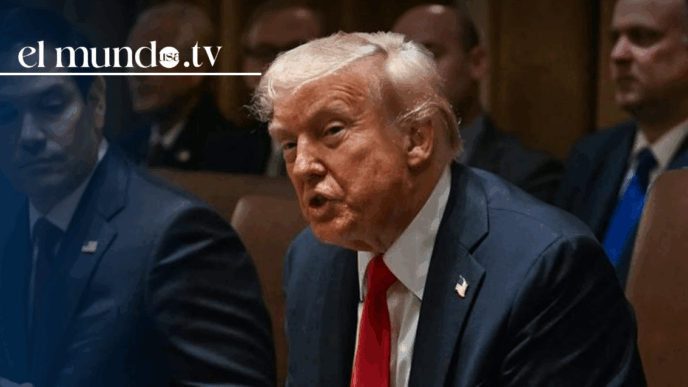
This contribution occurs within the framework of drastic cuts to foreign aid driven by the administration of President Donald Trump. The situation has generated concern among humanitarian organizations that have seen their budgets and programs reduced.
READ MORE: Mexico Emerges as the U.S.’s Top Goods Supplier
Objectives and Administration of Funds
The U.S. contribution will initially be coordinated through the UN Office for the Coordination of Humanitarian Affairs (OCHA). This office is led by Tom Fletcher, with a focus on centralizing and making aid delivery more effective.
According to the U.S. government, this formula aims to reduce duplication and bureaucracy in international assistance. Furthermore, it seeks to align resources with global priorities and the “national interests” of the United States.
The United States has identified approximately 17 priority countries for the distribution of these funds, including nations affected by complex crises. In contrast, other countries with severe humanitarian needs, such as Afghanistan or Palestinian territories, were not included in this initial resource allocation list, according to U.S. officials.
READ MORE: Trump claims that the US destroyed a drug facility in Venezuela
Global Context of Aid
The UN is currently facing a widespread decline in resources from traditional donors, which has forced the organization to review its funding strategy. Prior to the U.S. pledge, the UN had requested up to $23 billion for 2026 to address the growing needs of millions of vulnerable people affected by conflicts, natural disasters, and prolonged crises.
International bodies and critics have noted that, despite this disbursement, broad cuts to external aid could worsen the humanitarian situation in various regions.