Construction crews working on a highway project in northern Italy made an unexpected archaeological discovery when they uncovered the remains of an ancient sanctuary dating back to the fifth century B.C. The find occurred during wartime ordnance clearance operations in Ponso, a town located approximately 45 miles southwest of Venice, according to an announcement by the Italian Superintendency of Archaeology, Fine Arts and Landscape on May 19.
The construction workers from Veneto Strade S.p.A. were building a road connecting Borgo Veneto to Carceri when they stumbled upon the significant archaeological site. What began as routine bomb disposal work transformed into a major historical discovery that sheds light on pre-Roman civilization in the region.
Main Developments
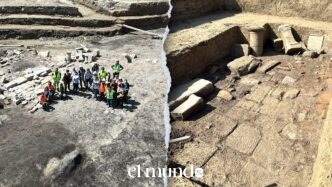
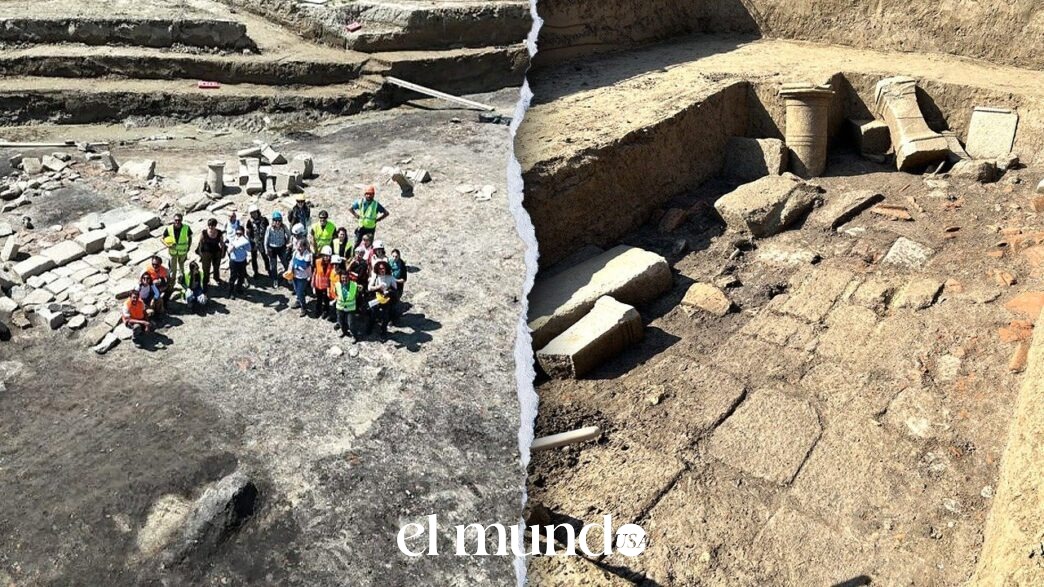
The excavation revealed large rectangular foundation structures that archaeologists have identified as temples. One of the structures displays characteristics of a peripteral temple, a design featuring columns on all sides of the building. This architectural style indicates the sophistication and religious importance of the site during ancient times.
As excavations continued, new large rectangular foundation structures identifiable as temples emerged, according to the Italian Superintendency of Archaeology, Fine Arts and Landscape. The discovery suggests this was a significant religious complex that served the local population for centuries.
Among the most notable findings are numerous inscriptions written in both Latin and the Venetic script. Venetic was an ancient language used in the region before Roman rule, making these inscriptions particularly valuable for understanding pre-Roman civilization in northeastern Italy. Many of these inscribed stones were found in varying conditions and positions throughout the site.
According to officials, the inscriptions appear to have been reused in a paved flooring structure whose function is still uncertain, while some remain in their original position. This indicates that the site underwent significant modifications over time. Some of the inscriptions have a votive or religious character, suggesting they were offerings or dedications made by ancient worshippers.
What We Know So Far
The sanctuary dates to the fifth century B.C., placing its origins well before Roman dominance in the region. Evidence indicates the site remained in active use for several centuries, spanning from pre-Roman times into the Roman era.
The paving appears to have been constructed during the 1st century A.D., according to evidence currently under study. This detail is significant because it demonstrates that the site continued to serve a purpose long after its initial construction.
Archaeologists have determined that the site shows continuity of use and transformation over time, rather than abandonment. This finding is particularly important because it reveals how religious and cultural practices evolved in the region as Roman influence grew.
The site appears to have retained an important function during Roman times as well, although expressed through different forms and cultural frameworks than in the earlier phase, according to the Italian Superintendency. This suggests that rather than destroying or neglecting pre-Roman sacred sites, the local population adapted them to new cultural realities.
Researchers believe that a branch of the Adige River flooded the area in antiquity, which may have contributed to the preservation of certain elements of the sanctuary. The flooding could also explain why some structures were buried and protected over the millennia.
What Happens Next
The Italian Superintendency of Archaeology, Fine Arts and Landscape continues to oversee the excavation and research at the Ponso site. Many aspects of the discovery remain under study, including the exact function of the paved flooring and the full extent of the sanctuary complex.
Archaeologists are currently analyzing the inscriptions found at the site to better understand the religious practices and cultural activities that took place there. The combination of Venetic and Latin texts provides a unique opportunity to study the transition from pre-Roman to Roman culture in the region.
The road construction project from Borgo Veneto to Carceri may be affected by the ongoing archaeological work, though specific details about timeline adjustments have not been announced. Veneto Strade S.p.A. was conducting the highway construction when the discovery was made.
Important Details
The location of the discovery in Ponso places it in the Veneto region of northeastern Italy, an area with a rich archaeological heritage. The town sits approximately 45 miles southwest of Venice, in an area that was home to the ancient Veneti people before Roman expansion.
The Venetic script found on many of the inscriptions represents an ancient writing system used by the Veneti civilization. These inscriptions are valuable because relatively few examples of Venetic writing survive, making each new discovery significant for linguistic and historical research.
The wartime ordnance clearance that led to the discovery highlights a common challenge in European construction projects. Many areas in Italy still contain unexploded bombs and munitions from World War II, requiring careful surveys before major construction can proceed.
The presence of a peripteral temple at the site indicates that this was not a minor shrine but a substantial religious complex. Peripteral temples, with their surrounding columns, required significant resources and skilled labor to construct, suggesting the community that built this sanctuary had considerable means and organization.
The reuse of inscribed stones in later flooring construction provides insight into how ancient peoples modified and repurposed their sacred spaces. Rather than discarding objects with religious significance, builders incorporated them into new structures, possibly maintaining some connection to the original sacred purpose of the materials.
Frequently Asked Questions
Where was the ancient sanctuary found in Italy?
The ancient sanctuary was found in Ponso, Italy, approximately 45 miles southwest of Venice. The discovery was made during highway construction connecting Borgo Veneto to Carceri.
How old is the ancient sanctuary discovered near Venice?
The sanctuary dates back to the fifth century B.C., making it approximately 2,500 years old. Evidence suggests the site remained in use through Roman times, with paved flooring constructed during the 1st century A.D.
What was found at the ancient sanctuary in Ponso?
Archaeologists found large rectangular temple foundation structures, including one peripteral temple with columns on all sides. They also discovered numerous inscriptions in both Latin and the ancient Venetic script, some with votive or religious character.
What is Venetic script?
Venetic script was an ancient writing system used in northeastern Italy before Roman rule. The inscriptions found at the Ponso sanctuary include texts in this pre-Roman language, providing valuable information about the civilization that built the site.
Why were workers clearing bombs when they found the sanctuary?
Construction crews from Veneto Strade S.p.A. were conducting wartime ordnance clearance operations as part of standard safety procedures before building a highway. During this process, they uncovered the remains of the ancient sanctuary.
The Italian Superintendency of Archaeology, Fine Arts and Landscape announced the discovery on May 19 and continues to study the site. Research into the inscriptions, temple structures and the overall significance of the sanctuary remains ongoing as archaeologists work to understand this glimpse into pre-Roman and Roman religious practices in northeastern Italy.