


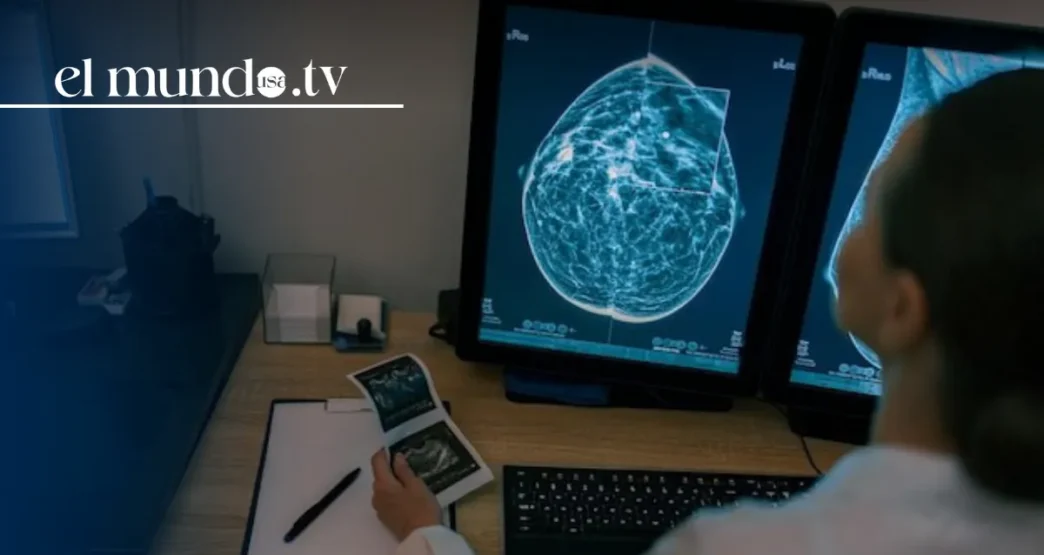
A recent advance in medical technology based on artificial intelligence (AI) promises to transform the early detection of breast cancer. This technology can reveal risk patterns that are not visible to radiologists in conventional mammograms.
This development opens the door to more personalized and effective prevention strategies in the fight against the leading cause of cancer death among women worldwide.
READ MORE: Judge Allows Limited Medicaid Data Sharing With ICE
Current Limitations of Mammography
Mammography is the standard test for the early detection of breast cancer in asymptomatic women. However, this technique has significant limitations, especially in women with dense breast tissue or fast-growing tumors, which can go unnoticed in radiographic images.
How Does AI Help Detect the Invisible?
A new artificial intelligence algorithm has been trained with thousands of mammograms from diverse regions of the world. It assesses the risk of developing breast cancer within the next five years from an apparently normal image.
Unlike traditional methods, this model does not require additional information about family history, genetics, or lifestyle. It directly analyzes the texture and distribution of glandular tissue to classify individual risk. The results of this classification are significant: women categorized as high-risk by the AI developed breast cancer four times more frequently than those with low scores.
READ MORE: Canal+ and Warner Bros. Discovery will expand the reach of HBO Max
More Individualized Prevention
This approach could enable more personalized prevention and surveillance, where AI is used as a second stage following traditional mammography. If the algorithm identifies a woman as high-risk, a magnetic resonance imaging (MRI) scan could be recommended as a complementary early detection method, thereby increasing the chances of identifying tumors in initial stages.
Experts consider that the AI-based methodology can be especially beneficial for younger women, particularly those who tend to develop more aggressive tumors and who currently are not part of the usual screening group.
The Future of Breast Cancer Detection
This technological advance does not replace medical professionals but is emerging as a valuable complementary tool for:
- Improving diagnostic accuracy
- Reducing late diagnoses
- Guiding more effective clinical decisions.
Its integration into screening programs could strengthen early detection strategies and increase opportunities for successful treatment and survival. While broader evaluations are still required for its widespread clinical implementation, the results so far are promising in the fight against breast cancer.