

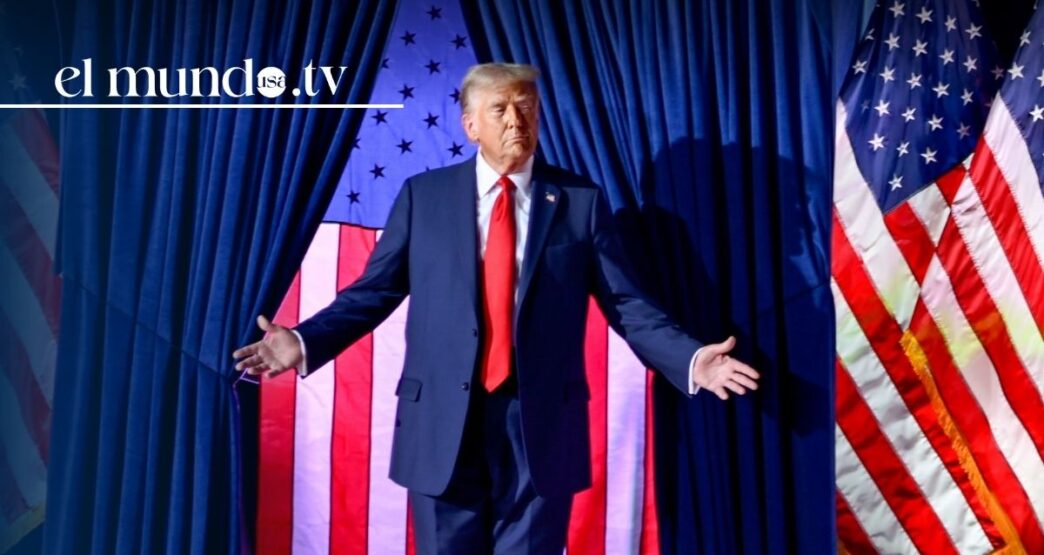
The President of the United States, Donald Trump, announced that he will increase the global tariff from 10% to 15% with immediate effect, following the judicial setback he received from the Supreme Court of the United States regarding his trade policy.
Thru Truth Social, the president announced that he will apply the new levy based on Section 122 of the Trade Act of 1974, which allows for tariffs of up to 15% for a maximum period of 150 days.
What did the Supreme Court decide about Trump’s tariffs?
The ruling, approved by six votes to three, determined that the 1977 legislation previously used by Trump does not grant him the authority to impose global tariffs unilaterally.
The Chief Justice of the Court, John Roberts, stated that the rule “does not refer to tariffs or levies”, limiting the scope of executive power in commercial matters.
Among the judges who rejected the presidential stance are two nominated by Trump himself. Only Brett Kavanaugh supported the president’s position.
Follow our accounts on Facebook and Instagram to stay up to date with the latest news.
New tariffs: Mexico, Canada, Brazil, and India in the crosshairs
The decision affects:
- Base rate of 10% on foreign imports
- “Reciprocal” burdens on key partners
- 25% additional to Mexico and Canada
- Up to 50% to Brazil and India
Treasury Secretary Scott Bessent assured that the new scheme will keep tariff revenues “practically unchanged” by 2026.
An analysis by the University of Pennsylvania projects possible refunds of up to 75 billion to affected companies, although the ruling did not directly address this point.
For its part, Yale University estimated that the American consumer will face an effective tariff rate of 9.1%, the highest since 1946, with the exception of 2025.
Reaction of Wall Street and the business sector
After the announcement, Wall Street recorded a moderate rise, in a move that analysts attribute to the fact that the decision was already anticipated by the markets.
Organizations like the National Retail Federation celebrated the decision for providing greater “legal certainty”. In contrast, Senator Elizabeth Warren warned that there is no clear mechanism for refunding previously collected tariffs.
The Governor of California, Gavin Newsom, requested the full return of the funds he considers illegally collected.
Read more: 2026 World Cup: FIFA confirms sold-out tickets and record sales for the United States, Mexico, and Canada
International reactions: Europe and Asia analyze the impact
In Europe, French President Emmanuel Macron praised the role of democratic checks and balances in the United States, although he noted that they will carefully assess the consequences of the new 15% tariff.
In Asia:
- Japan confirmed that its investments agreed upon with Washington remain in effect.
- South Korea ratified its trade agreement with the U.S.
- Taiwan and Hong Kong anticipate a limited impact.
- Indonesia and Malaysia announced that they will strengthen trade diversification.
So far, China has not issued an official stance.
What’s next for Trump’s trade policy?
Trump assured that the ruling leaves him “more powerful” and indicated that he will seek legal alternatives to support his trade strategy. However, the full text of the new executive order and details about its possible extension have not yet been published.
The measure opens a new chapter in the United States’ trade war, with potential effects on inflation, international trade, and diplomatic relations with strategic partners.
The debate over Trump’s tariffs, their impact on consumers and businesses, and the legality of their implementation will continue to shape the economic and political agenda in the coming months.