

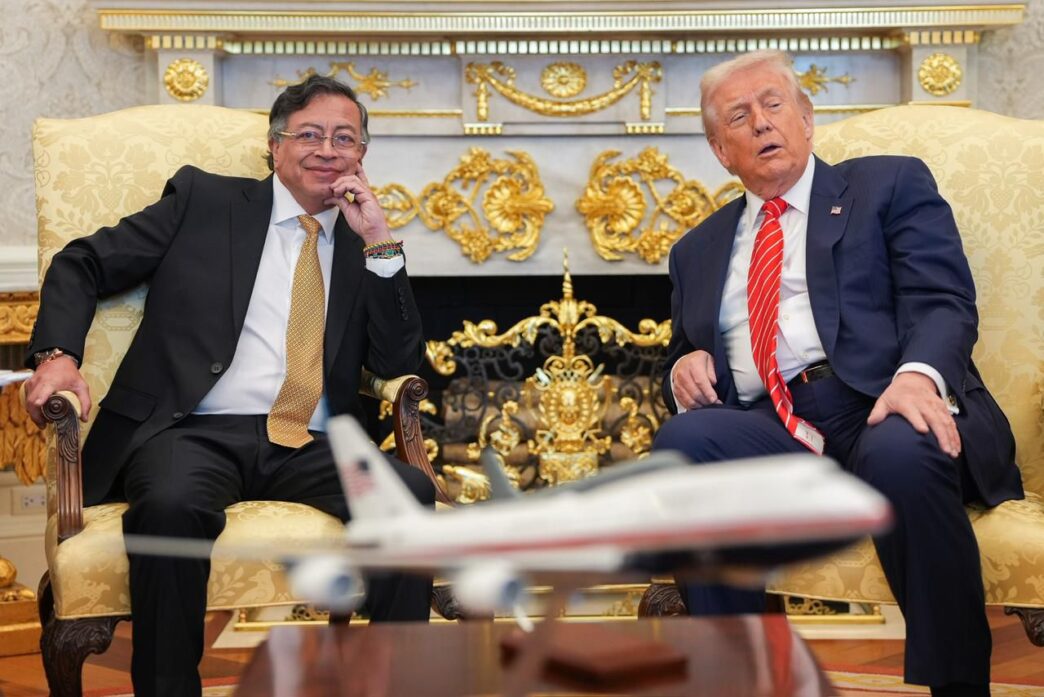
Colombian President Gustavo Petro met with U.S. President Donald Trump at the White House on February 3, 2026, following a year marked by intense tensions between both countries. The meeting occurred after months of sharp disagreements on issues including drug trafficking policies and political rhetoric, which significantly strained the longstanding alliance between Washington and Bogotá.
The diplomatic strain in 2025 represented one of the most challenging periods in U.S.-Colombia relations in three decades. Key areas of conflict included differing approaches to counternarcotics efforts and Colombia’s stance on Venezuela. Both leaders exchanged publicly critical statements throughout the year, deepening the divide between the two governments.
Colombia has historically been a principal U.S. partner in Latin America on security and economic cooperation. For decades, the bilateral relationship relied heavily on joint efforts to combat drug trafficking organizations that operate within and beyond Colombian borders. These efforts included cooperation on intelligence, military assistance, and financial aid designed to disrupt narcotics networks tied to cartels.
In recent years, however, the diplomatic rapport deteriorated, aggravated by policy disagreements during Petro’s administration. Petro’s government criticized prior U.S. counternarcotics strategies that heavily emphasized militarized approaches and advocated for reforms emphasizing social investment and alternative crop programs. Washington maintained demands for strict law enforcement against drug producers and traffickers, which Colombian officials viewed as insufficiently respectful of national sovereignty and development priorities.
Another source of contention involved Venezuela. Petro’s administration expressed willingness to engage more openly with the Maduro government, signaling a shift from the more confrontational posture the U.S. maintained. These differences complicated coordinated regional policies, adding friction to U.S.-Colombia cooperation on security and economic issues.
During the White House meeting, both leaders addressed the need to rebuild trust and find common ground, focusing specifically on renewed collaborations to counter drug trafficking and stabilize the neighboring Venezuelan crisis. The talks reflected mutual recognition that restoring bilateral ties required overcoming the rhetoric and policy disputes from the prior year.
Colombia remains one of the United States’ most important strategic partners in Latin America. Its location on key drug transit routes and its role in regional security make collaboration critical for both countries. The meeting between Petro and Trump at the White House marked a pivotal moment in attempting to recalibrate the U.S.-Colombia relationship amid growing geopolitical competition in the Americas.
The two governments have established frameworks in the past for addressing shared challenges including counternarcotics, democracy promotion, and economic development. The diplomatic engagement in early 2026 also took place amid broader shifts in Latin America, where debates over governance, security, and economic growth have intensified in several countries, adding complexity to regional alliances.
As the U.S. and Colombia moved forward, the success of renewed cooperation would depend on aligning strategies for drug interdiction and addressing political instability in Venezuela while respecting each country’s priorities. The White House visit signaled both a willingness to engage directly after past disputes and the persistent importance of the bilateral relationship to regional stability and U.S. foreign policy goals.