

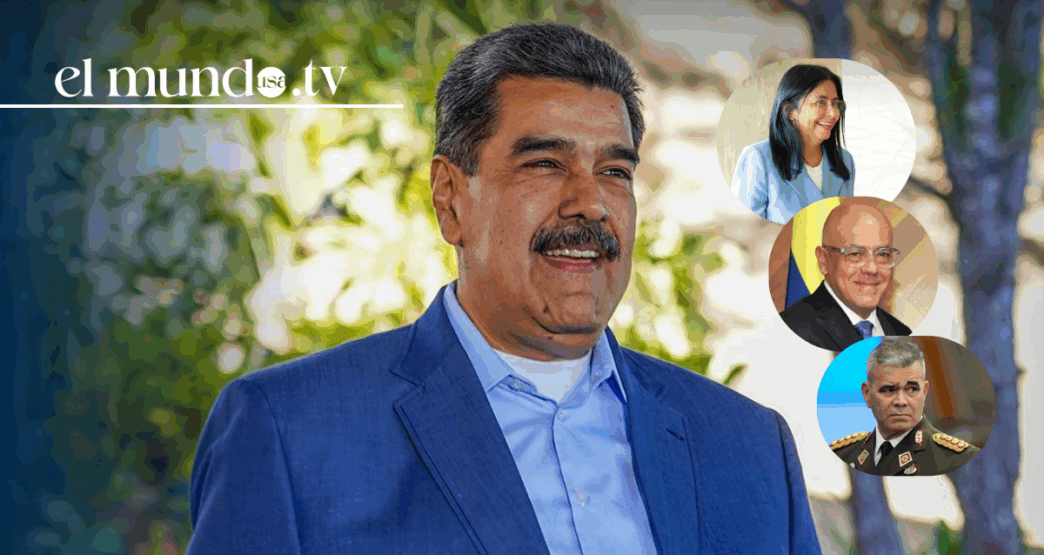
Since Nicolás Maduro assumed the presidency of Venezuela in 2013, the U.S. government has imposed sanctions on at least 120 Venezuelan officials and former officials, accusing them of anti-democratic acts, corruption, and human rights violations, according to official records from the Treasury Department’s Office of Foreign Assets Control (OFAC).
An investigation based on OFAC records reveals that, over 12 years of Maduro’s rule, high-ranking military officers, ministers, governors, police officials, and bureaucrats have been added to the U.S. sanctions blacklist as part of a diplomatic and financial pressure strategy against the regime in Caracas.
What do the U.S. sanctions against Venezuela entail?
The sanctions imposed by Washington prohibit U.S. citizens and companies from conducting financial transactions with the designated individuals, freeze assets under U.S. jurisdiction, and restrict their international travel.
In some cases, the lifting of sanctions has been conditioned on sanctioned officials publicly breaking with Nicolás Maduro, which demonstrates the use of these measures as a political tool.
Donald Trump concentrated most of the sanctions
82% of the sanctions were imposed during Donald Trump’s two administrations:
- First term (2017–2021)
- Second term, which began in January 2025
During these periods, 98 Venezuelan officials were added to the OFAC list, marking the most intense phase of U.S. pressure against Chavismo.
Nicolás Maduro, sanctioned since 2017
Nicolás Maduro himself was sanctioned on July 31, 2017, one day after the election of the National Constituent Assembly, a process the United States deemed illegitimate.
Washington accused the Venezuelan government of usurping the functions of the elected National Assembly, rewriting the Constitution, and consolidating an authoritarian regime, while Caracas defended the Constituent Assembly as a legal mechanism provided for in the 1999 Constitution.
This episode marked the main breaking point in relations between the United States and Venezuela.
Read more: Iran warns it is ready for war, but opens the door to negotiations with the United States
The “pointing finger” against 120 Maduro supporters
Of the 120 sanctioned individuals, OFAC classifies them as follows:
- 52 officials for antidemocratic acts
- 46 officials for corruption
- 22 officials for human rights violations
The Venezuelan government has denounced these measures as foreign interference, calling them an illegal economic blockade that has exacerbated the humanitarian crisis.
High-ranking officials and family members of Maduro sanctioned
Among the most prominent individuals sanctioned by the United States are:
- Delcy Rodríguez, Executive Vise President
- Jorge Rodríguez, President of the National Assembly
- Vladimir Padrino López, Minister of Defense
- Nicolás Maduro Guerra, son of the president
The latter was identified in 2019 for his alleged role in propaganda strategies and was subsequently charged with drug trafficking by the U.S. Attorney’s Office, along with his father, Cilia Flores, Diosdado Cabello, and Ramón Rodríguez Chacín.
Sanctions against Venezuelan police and military bodies
Since 2019, the U.S. strategy has been expanded to sanction entire institutions, including:
- General Directorate of Military Counterintelligence (DGCIM)
- Bolivarian National Intelligence Service (SEBIN)
- Special Operations Forces (FAES)
These entities were accused of torture, repression, and extrajudicial executions, including the case of Captain Rafael Acosta Arévalo, who died in DGCIM custody.
Governors and regional leaders in the spotlight
The sanctions also targeted governors and former governors, mainly of military origin, including:
- Rafael Lacava (Carabobo)
- Omar Prieto (Zulia)
- Rodolfo Marco Torres (Aragua)
- Francisco Rangel Gómez (Bolívar)
Washington held them responsible for blocking humanitarian aid and backing the Maduro government during the political crisis.
The impact of sanctions has been the subject of international debate. In 2021, UN Special Rapporteur Alena Douhan concluded that unilateral coercive measures had a “devastating effect” on human rights and deepened the economic crisis.
Other United Nations experts warned that the sanctions appeared to be aimed at regime change rather than the protection of human rights.