

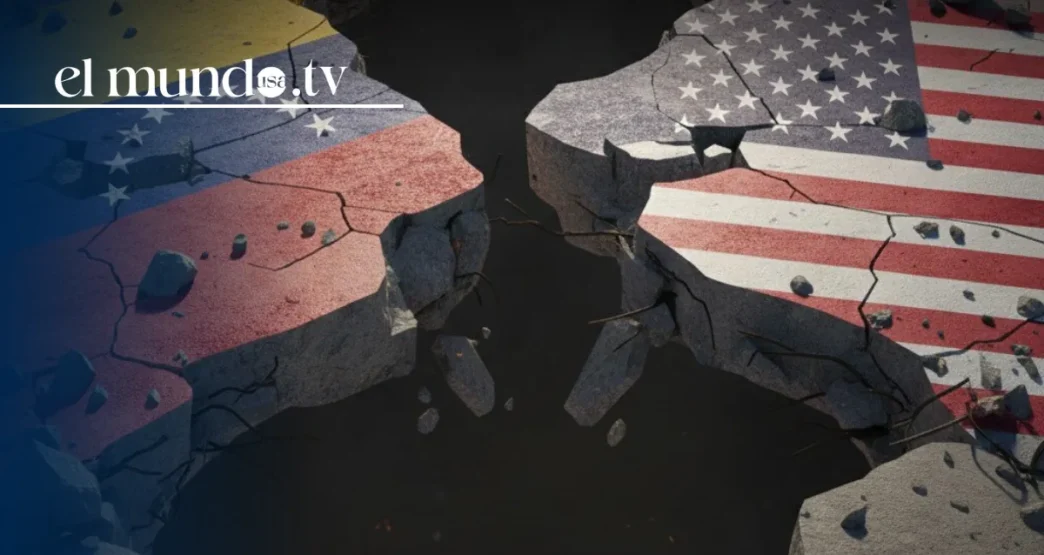
USA, under the administration of President Donald Trump, announced in December 2025 the imposition of new sanctions against Venezuela and a naval blockade on sanctioned oil tankers. The announcement was made from Washington D.C. and formalized during a UN Security Council session.
The actions include the pursuit and seizure of vessels in Caribbean waters. The primary justification for the imposition of these measures by the USA is the fight against drug trafficking. Washington accuses the government of Nicolás Maduro of using oil revenues to finance activities categorized as narco-terrorism.
Reasons for the Imposition
The imposition of sanctions by the USA is based on accusations that the Maduro regime leads a narco-terrorist organization, called the Cartel de los Soles. The USA designated this cartel as a foreign terrorist organization.
The central argument is that Venezuelan oil income sustains these criminal networks. Furthermore, the USA states that Maduro’s family structure and close associates are involved in corruption and sanctions evasion schemes.
READ MORE: Donald Trump offers $3,000 to migrants who agree to self-deport from the United States
The Treasury Department sanctioned Maduro’s relatives and associated businessmen, alleging they operate a corruption network within PDVSA. In conclusion, the USA links the survival of the Maduro government with illicit activities, so the imposition of sanctions seeks to cut off that financial flow.
USA imposes sanctions on Venezuela against drug trafficking
The announcement of the imposition of sanctions occurred in multiple stages. First, the Treasury Department issued statements detailing sanctions on individuals and shipping companies on December 11, 2025.
Then, President Trump ordered a “total blockade” on sanctioned oil tankers operating with Venezuela. Subsequently, the crisis escalated to the UN Security Council.
Venezuela requested an urgent session where the USA, represented by Ambassador Mike Waltz, declared it would apply sanctions “to the maximum”. Waltz reiterated his government’s position before the Council.
READ MORE: The United States suspends the visa lottery by order of Trump after the Brown shooting
Tense situation between Venezuela and the USA
The relationship between Venezuela and the USA is going through a phase of maximum military tension. The USA has deployed a significant naval presence in the southern Caribbean, near Venezuelan waters.
This operation, named “Southern Lance”, includes airstrikes against vessels suspected of drug trafficking. Venezuela denounces these actions as a violation of its sovereignty and a threat to international peace.
Caracas rejects the USA’s narrative and alleges it is an aggression plan to seize its natural resources. The Venezuelan navy has begun escorting oil tankers in response.
Venezuela’s response
Venezuela responded to the imposition of sanctions and the blockade with a firm international condemnation. The government of Nicolás Maduro labeled the USA’s actions as “piracy,” “blatant robbery,” and “the biggest extortion” in its history. It sent a formal letter to all UN members warning about the impact on the global economy.
Furthermore, Venezuela took the case to the UN Security Council, where its ambassador, Samuel Moncada, accused the USA of executing a “crime of aggression”. He demanded the Council condemn the American actions and call for the lifting of the naval blockade. Maduro affirmed his country “will never be a colony”.
READ MORE: USA announces airstrike against Islamic State in Syria
The international community shows divided stances regarding the imposition of sanctions and the escalation. Countries like Russia and China backed Venezuela, calling the USA’s behavior “cowboy” and intimidating.
Other states, including some Latin American nations, expressed concern over the militarization and urged dialogue.The current situation underscores a profound deterioration in the framework of international law and regional security.
The UN Secretary-General reiterated that dialogue is the only path to prevent greater instability and human suffering in the region. The outcome of this confrontation could set a significant precedent for the global order.