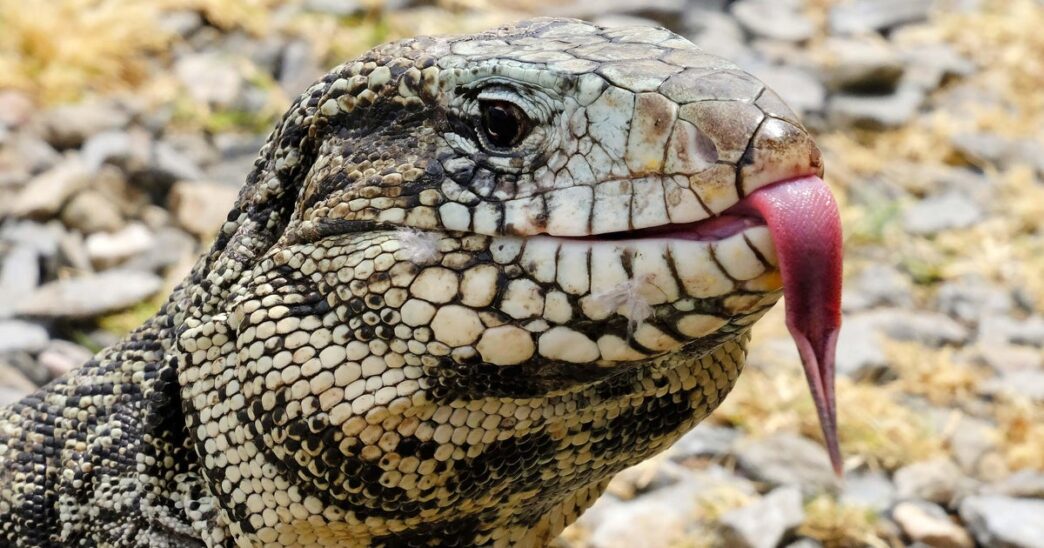
While soccer legend Lionel Messi continues to dazzle fans at Inter Miami, another Argentine import is causing serious concern among Florida wildlife officials. The Argentine black and white tegu, a massive invasive lizard that can grow nearly five feet long, has become one of the state’s most problematic non-native reptiles, with Miami-Dade County reporting more sightings than anywhere else in the nation.
According to the Early Detection and Distribution Mapping System (EDDMapS), Miami-Dade County had recorded 8,342 tegu sightings as of July 2026. This staggering number is more than four times the reports from St. Lucie County, which sits in second place with 1,981 documented encounters. Broward County has logged 98 reports, Palm Beach County has 49, and the Florida Keys have recorded 25 sightings of these invasive tegu lizards.
Why Invasive Tegu Lizards Threaten Florida’s Ecosystem
These large reptiles, native to South America, first arrived in the United States through the exotic pet trade around 2002. Wildlife experts believe that escaped or intentionally released pets eventually established breeding populations throughout Florida, where the subtropical climate provides ideal conditions for their survival and reproduction.
The invasive tegu poses a significant threat to native wildlife because of its voracious and indiscriminate appetite. These omnivorous lizards consume almost anything they encounter, including eggs from birds, American alligators, American crocodiles, and sea turtles. They also prey on gopher tortoises, small mammals, insects, fruits, and even pet food left outdoors by unsuspecting homeowners.
Researchers with the South Florida Water Management District have documented tegus raiding alligator and crocodile nests in South Florida, while Florida Fish and Wildlife Conservation Commission officials confirm the reptiles also consume threatened juvenile gopher tortoises and damage agricultural crops.
Adult tegus face virtually no natural predators in Florida, which allows their populations to expand rapidly once they establish themselves in a new area. This lack of natural population control makes management efforts particularly challenging for wildlife officials.
Understanding the Tegu Problem in Miami-Dade
Florida currently has four confirmed breeding populations of Argentine black and white tegus. One of these established populations exists in southern Miami-Dade County, while others are found in Hillsborough, Charlotte, and St. Lucie counties. Wildlife officials note that sightings in other areas typically involve escaped or released pets rather than self-sustaining breeding groups.
The Miami-Dade breeding population has existed for well over a decade, which explains why the county has accumulated thousands more reported sightings than any other location in the United States. This long-established presence means the invasive tegu population has had ample time to spread and multiply throughout the region.
Physical Characteristics of the Argentine Tegu
These are not ordinary backyard lizards. The Argentine black and white tegu presents impressive physical characteristics that make them easy to identify once you know what to look for:
- Adults can grow to nearly 5 feet in total length
- They can weigh up to 15 pounds at maturity
- Lifespan extends up to 20 years in favorable conditions
- Females lay approximately 35 eggs annually
Young tegus display a distinctive bright green head that fades after approximately one month. As they mature, these reptiles develop their characteristic black and white banded pattern that gives them their common name.
What South Florida Residents Should Do
Florida classifies Argentine black and white tegus as an invasive species without protection, except under general animal cruelty laws. Wildlife officials actively encourage residents to participate in tracking and removal efforts.
If you encounter an invasive tegu lizard in your neighborhood, the Florida Fish and Wildlife Conservation Commission recommends taking the following steps:
- Take a clear photograph of the animal if safely possible
- Note the exact location where you spotted the reptile
- Submit your report through the IveGot1 mobile application
- Alternatively, use the IveGot1 website to file your report
- Call the Exotic Species Hotline at 888-Ive-Got1
Property owners may humanely remove tegus found on their land with appropriate permissions. However, residents should exercise caution when approaching these large reptiles, as they can bite and scratch when threatened.
Protecting Your Property and Community
Residents throughout South Florida can help prevent tegu populations from expanding by taking simple precautions around their homes. Avoid leaving pet food outdoors, as this attracts not only tegus but other wildlife as well. Secure garbage containers and eliminate potential food sources that might draw these opportunistic feeders to residential areas.
Community awareness plays a crucial role in managing this invasive species. By reporting sightings promptly and accurately, residents contribute valuable data that helps wildlife officials track population movements and focus removal efforts where they are needed most. The battle against the invasive tegu lizard requires ongoing vigilance from both authorities and the public throughout Florida.