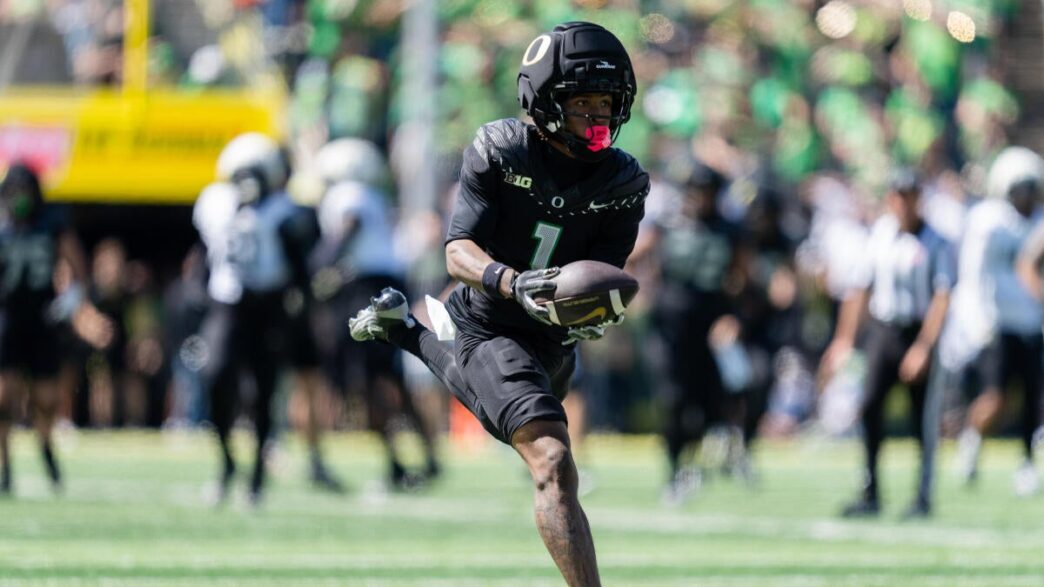
When it comes to offensive firepower in college football, few things matter more than having a deep and talented group of pass catchers. On July 23, 2026, analysts released their rankings of the best receiving corps in the nation, and two programs stand head and shoulders above the rest: the Oregon Ducks and the Miami Hurricanes.
A quarterback’s success often hinges on the weapons surrounding him, and these teams have assembled rosters that would make any signal-caller confident stepping into the pocket. From explosive wide receivers to athletic tight ends, the following programs possess the kind of depth that keeps defensive coordinators awake at night.
Oregon Ducks Claim the Top Spot
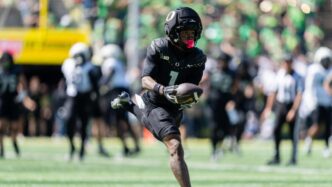
The Oregon Ducks have established themselves as the premier pass-catching unit in college football heading into the 2026 season. Their receiving corps features multiple players who could serve as the number one option on most teams across the country, creating an embarrassment of riches for their offensive coaching staff.
Leading the charge is Dakorien Moore, a dynamic playmaker with NFL potential written all over his game. Despite missing four games during the previous season, Moore still managed to accumulate nearly 500 receiving yards. His route-running precision and ability to attack the football at its highest point make him a nightmare for opposing cornerbacks.
“Game planning to cover one great player is frustrating, doing it to stop four of them is almost impossible in today’s game.”
Evan Stewart represents another explosive threat in the Ducks’ arsenal. Although injuries have hampered his production over the past two seasons, his talent remains undeniable. When healthy, Stewart possesses the speed and route-running ability to rank among the top five receivers in the entire nation.
The supporting cast proves equally impressive:
- Jeremiah McClellan returns as the team’s leading receiver from 2025, having caught 38 passes for 557 yards and three touchdowns
- Transfer Iverson Hooks brings proven production after recording 72 receptions for over 900 yards at his previous program
- Tight end Jamari Johnson provides a reliable target with exceptional hands and the athleticism to create yards after the catch
Miami Hurricanes Build Around Generational Talent
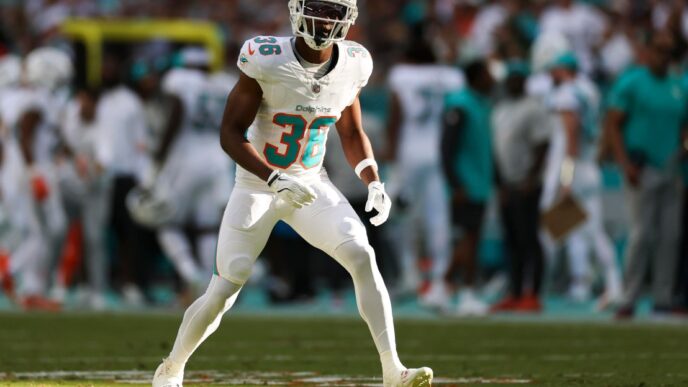
The Miami Hurricanes enter 2026 with one of the most exciting young receivers in college football history. Malachi Toney burst onto the scene with a freshman campaign that left opposing defenses searching for answers. His 109 receptions for more than 1,200 yards established him as an instant star, and he even threw for two touchdowns as a versatile offensive weapon.
Toney’s combination of speed, burst, and elusiveness makes him nearly impossible to contain in the open field. Every time he touches the football, there exists a legitimate possibility he could take it to the end zone. Beyond his receiving abilities, Toney has proven himself a willing blocker and dynamic punt returner.
The Hurricanes strengthened their receiving corps further by adding Duke transfer Cooper Barkate. During his final season with the Blue Devils, Barkate hauled in 72 passes for over 1,100 yards and seven touchdowns. His reliable hands and understanding of coverage concepts make him the perfect complement to Toney’s explosive playmaking ability.
Additional weapons in Miami’s arsenal include:
- Joshua Moore, a talented receiver still working to unlock his full potential after recording 200 yards and two touchdowns
- Vandrevius Jacobs, who contributed nearly 550 yards and four touchdowns in a supporting role
- Tight end Elija Lofton, whose receiver-like movement skills create consistent matchup problems
- Luka Gilbert, expected to expand his role as a big-bodied target in 2026
Texas Longhorns Reshape Their Receiving Corps
The Texas Longhorns made significant moves to overhaul their receiving room, headlined by the addition of transfer Cam Coleman from Auburn. Coleman’s immense talent was often underutilized at his previous program due to inconsistent quarterback play, but he now finds himself in a situation poised to showcase his full abilities.
With prototypical size, speed, and an exceptional catch radius, Coleman has the tools to produce a dominant season in Austin. Every time he touches the football, he represents a legitimate scoring threat capable of changing the complexion of any game.
These three programs represent just the beginning of an incredibly talented group of pass-catching units across college football. As the 2026 season approaches, defenses across the nation face the daunting challenge of containing these explosive offensive weapons.