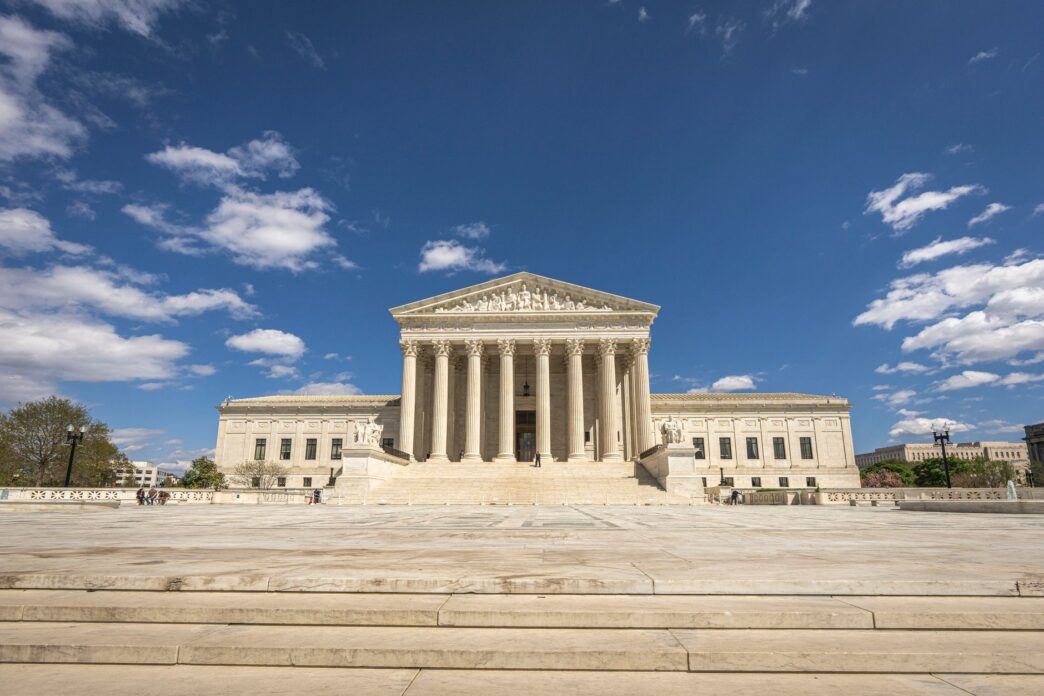
The U.S. Supreme Court on Monday declined to hear President Donald Trump’s appeal seeking to overturn a jury’s finding that he sexually abused writer E. Jean Carroll in 1996 and later defamed her. The decision, announced on June 29, 2026, means the 2023 jury verdict and $5 million civil judgment against Trump remain in place.
Carroll filed her lawsuit in Manhattan federal court, alleging Trump assaulted her in a department store dressing room nearly three decades ago. The case represents one of multiple legal battles involving the president and the writer, with a separate defamation case carrying an $83.3 million judgment still pending on appeal.
Main Developments in the Case
The Supreme Court’s refusal to take up the case effectively ends Trump’s legal efforts to challenge this particular verdict. Carroll first made her allegations public in 2019 and filed her lawsuit three years later in Manhattan federal court.
During the trial, Trump’s legal team raised several objections that formed the basis of his appeal. His lawyers argued that U.S. District Judge Lewis Kaplan should not have allowed testimony from Jessica Leeds and Natasha Stoynoff, two women who also accused Trump of sexual misconduct. The defense also objected to the Access Hollywood tape being shown to jurors during the proceedings.
The 2nd U.S. Circuit Court of Appeals upheld the jury verdict in a 2024 ruling, rejecting Trump’s arguments. The Supreme Court’s decision not to hear the case means that appellate ruling stands as the final word on these legal challenges.
A spokesperson for Trump responded to the Supreme Court decision with a statement criticizing the legal proceedings. The statement read: “The American People stand with President Trump as they demand an immediate end to all of the Witch Hunts, including the Democrat-funded travesty of the Carroll Hoaxes. President Trump will keep winning against Liberal Lawfare, as he continues to focus on his mission to Make America Great Again.”
What We Know So Far
The case centers on Carroll’s allegations that Trump assaulted her in a department store dressing room in 1996. Carroll came forward publicly with these accusations in 2019 and subsequently filed her federal lawsuit.
The defamation claims in this case relate to statements Trump made after his first term as president, during which he called her claims a “con job” and “hoax.” A jury found in Carroll’s favor on both the sexual abuse and defamation claims in 2023, awarding her $5 million in damages.
Trump has denied all allegations made by Carroll throughout these legal proceedings. His legal team pursued multiple avenues of appeal, challenging evidentiary decisions made during the trial, but both the appeals court and now the Supreme Court have declined to disturb the jury’s findings.
It is important to distinguish this case from a separate defamation lawsuit that resulted in an $83.3 million judgment. That case remains on appeal and has not been resolved. The two cases, while both involving Carroll and Trump, are proceeding on different legal tracks.
What Happens Next
With the Supreme Court declining to hear the appeal, the 2023 verdict and $5 million judgment are now final in this particular case. The separate defamation case with the $83.3 million judgment continues through the appeals process and could potentially reach the Supreme Court at a future date.
The legal proceedings in that separate case will continue independently of this ruling. Carroll and her legal team have not issued a public statement regarding the Supreme Court’s decision as of the announcement.
Background on the Legal Proceedings
The timeline of events in this case spans decades. The alleged assault occurred in 1996 at a department store. Carroll waited more than two decades before making her allegations public in 2019. She filed her federal lawsuit three years after going public with her accusations.
The trial took place in Manhattan federal court before Judge Lewis Kaplan. During the proceedings, the jury heard from multiple witnesses, including Leeds and Stoynoff, whose testimony Trump’s lawyers sought to exclude. The defense argued their testimony was prejudicial and should not have been admitted.
The jury also viewed the Access Hollywood tape, a recording from 2005 that surfaced during the 2016 presidential campaign. Trump’s legal team objected to the tape being shown, arguing it was inflammatory and irrelevant to the specific allegations at hand.
Despite these objections, Judge Kaplan allowed both the witness testimony and the tape to be presented to the jury. The 2nd Circuit Court of Appeals later found that these evidentiary decisions did not warrant overturning the verdict when it issued its ruling in 2024.
The Two Carroll Cases Explained
Carroll has pursued two separate legal cases against Trump, and distinguishing between them is essential for understanding the current legal landscape.
The first case, which the Supreme Court declined to review on Monday, resulted in the $5 million judgment. This case included both the sexual abuse claim stemming from the alleged 1996 incident and defamation claims based on statements Trump made after leaving his first term as president.
The second case involves only defamation claims and resulted in a significantly larger judgment of $83.3 million. That case is still on appeal and has not been finally resolved. Any developments in that case would be separate from Monday’s Supreme Court decision.
Frequently Asked Questions
Did the Supreme Court rule on whether Trump committed sexual abuse?
No. The Supreme Court declined to hear the appeal, which means it did not rule on the merits of the case. The 2023 jury verdict finding that Trump sexually abused Carroll remains in place because the Court refused to take up the matter.
How much does Trump owe E. Jean Carroll?
The $5 million judgment from the 2023 case is now final following the Supreme Court’s decision. A separate case with an $83.3 million judgment is still on appeal and has not been finally resolved.
What was Trump found liable for in this case?
A jury found Trump liable for sexually abusing E. Jean Carroll in 1996 and for later defaming her. The jury did not find that the conduct amounted to rape. The finding was specifically for sexual abuse.
Is the Carroll legal battle over?
This particular case is concluded, but the separate defamation case with the $83.3 million judgment remains on appeal. That case could potentially involve further legal proceedings.
Court Process and Appeal History
The legal journey in this case followed a standard path through the federal court system. After the 2023 jury verdict in Manhattan federal court, Trump’s legal team filed an appeal with the 2nd U.S. Circuit Court of Appeals.
The appeals court reviewed Trump’s arguments regarding the admission of testimony from Leeds and Stoynoff, as well as the decision to allow the Access Hollywood tape to be shown to jurors. In 2024, the appeals court upheld the original verdict, finding no reversible error in Judge Kaplan’s rulings.
Trump then petitioned the Supreme Court to review the case. The Court’s decision not to hear the appeal is final and cannot be appealed further. When the Supreme Court declines to take a case, it does not indicate agreement or disagreement with the lower court’s ruling but simply means the Court has chosen not to review the matter.
The Supreme Court receives thousands of petitions each year and accepts only a small fraction for full review. The decision to deny review in this case means the 2nd Circuit ruling stands as the final appellate decision on the legal issues Trump raised.
Trump continues to deny all allegations made by Carroll. His legal team may continue to pursue the appeal in the separate $83.3 million case, which remains pending before the courts.