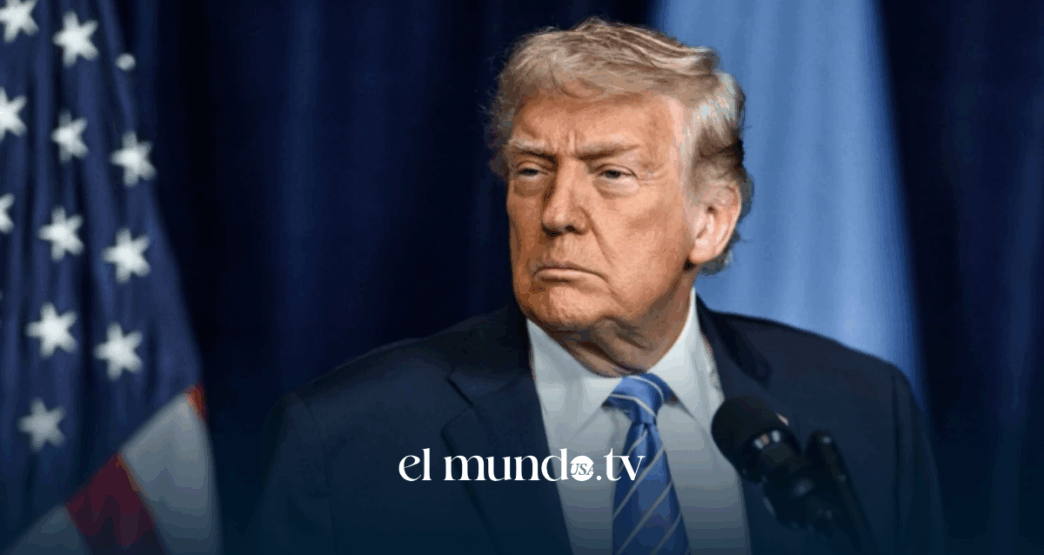
President Donald Trump said the standoff with Iran over the Strait of Hormuz has come to an end. He calls the outcome a major success after days of heightened global tension sparked by the disruption of one of the world’s most critical oil shipping routes.
“It’s over — it’s a great victory,” Trump said in interview with USA TODAY. He frames the development as a key achievement of his administration’s pressure campaign.
The crisis began earlier this month when Iran effectively restricted passage through the vital corridor. The move triggered immediate concern across global markets, sending oil prices upward and raising fears of a broader regional conflict that could disrupt energy supplies worldwide.
Trump claims to have achieved a victory with the reopening of the Strait of Hormuz
For more than a week, the blockade and intermittent security threats in the area created uncertainty for commercial shipping, forcing some tankers to reroute or delay transit. Governments and energy analysts warned that a prolonged closure could have severe economic consequences, particularly for countries heavily dependent on Gulf oil exports.
Diplomatic efforts intensified as the U.S. pushed for a resolution, with Trump announcing a two-week ceasefire proposal on April 7. The agreement was conditioned on Iran reopening the strait to commercial traffic. However, negotiations faced setbacks when Tehran resisted the condition, arguing that ongoing Israeli military operations in Lebanon undermined the ceasefire framework.
A breakthrough appeared to come on April 17, when Iran’s foreign minister, Seyed Abbas Araghchi, said in a social media post that the strait is now “completely open.” He added that commercial vessels would be allowed to pass under coordinated routes established by Iran’s Ports and Maritime Organisation, aligning the move with broader ceasefire arrangements in the region.
The reopening of the strait is seen as a crucial step toward stabilizing global energy markets and easing fears of further escalation. Still, uncertainty remains.
Despite Iran’s announcement, Trump indicated that U.S. pressure on Tehran is not over. In a social media post, he said the U.S. naval blockade targeting Iranian ports will remain in “full force” until negotiations are fully completed.
“The Naval Blockade will remain in full force and effect as it pertaint to Iran, only, until such time as our transaction with Iran is 100% complete,” Trump wrote, adding that most key issues have already been negotiated and that a final agreement could be reached quickly.
While the reopening of the Strait of Hormuz has eased immediate concerns, analysts caution that the episode underscores how quickly tensions in the region can disrupt global trade — and how fragile the current ceasefire may be.