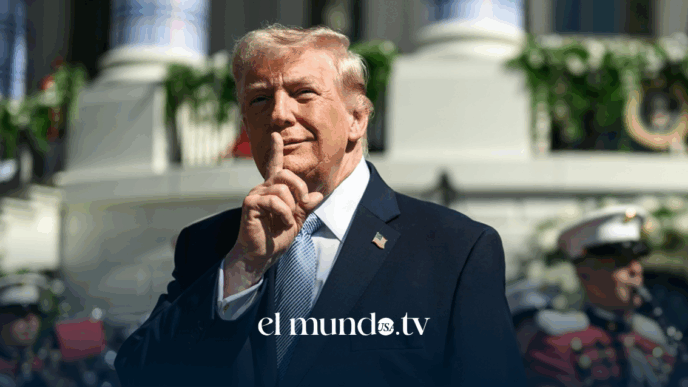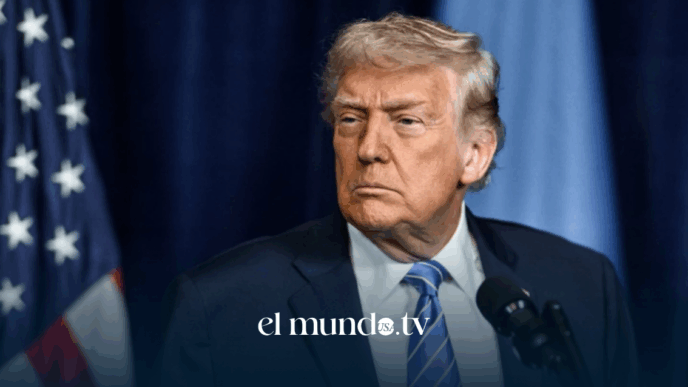
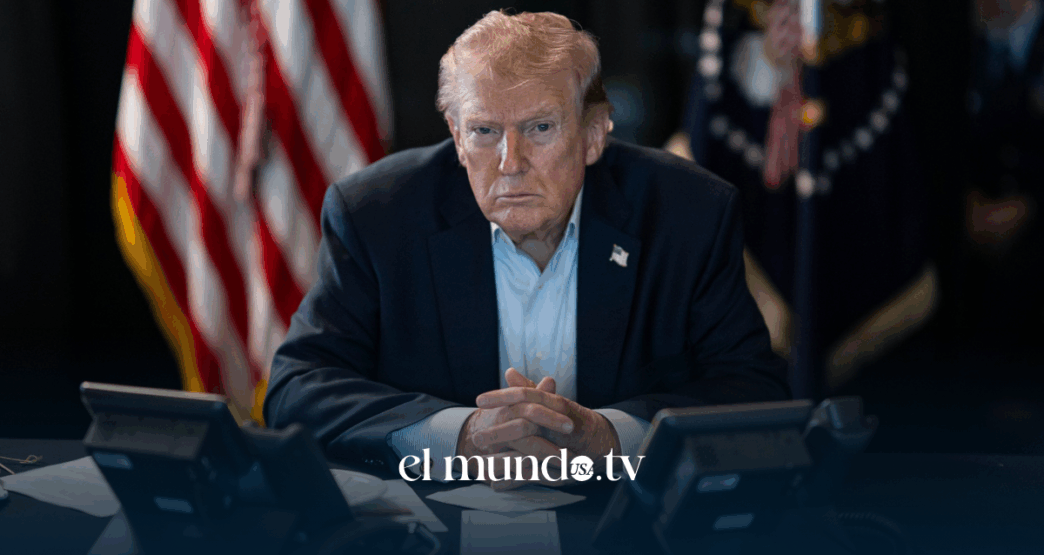
President Donald Trump detailed a sweeping “all-or-nothing” U.S. naval blockade of the Strait of Hormuz, vowing to cut off Iran’s oil revenues and enforce strict control over one of the world’s most critical energy routes. In an interview with Fox News’ Maria Bartiromo, Trump made clear that the policy would leave no room for exceptions.
“We’re not going to let Iran make money on selling oil to people that they like and not people that they don’t like… It’s going to be all or none,” Trump said at Fox News, adding that the strategy could mirror past U.S. actions against Venezuela, but “at a higher level.”
READ: Trump’s Triumphal Arch proposal heads to review in Washington
The announcement comes after failed negotiations between the United States and Iran, escalating tensions in a region that underpins global energy security. Trump emphasized that under the proposed policy, every country—ally or adversary—would either have full access to the waterway or none at all, signaling a hardline approach with global implications.
The stakes surrounding the Strait of Hormuz are exceptionally high. The narrow passage handles roughly 20% to 25% of the world’s seaborne oil trade, making it the most important energy chokepoint on the planet. Any disruption to traffic through the strait has immediate ripple effects across global markets, as recent volatility in oil prices has already demonstrated.
A prolonged blockade could trigger a sharp spike in energy prices worldwide, driving inflation and increasing costs for transportation, manufacturing, and food production. Countries in Asia—including China, India, Japan, and South Korea—would be among the most affected, as they rely heavily on oil shipments that pass through the strait.
READ: Donald Trump reveals his work in Iran isn’t finished
Beyond oil, the impact would extend to global gas supplies. Nearly one-fifth of the world’s liquefied natural gas exports, particularly from Qatar, transit through Hormuz, meaning disruptions could strain electricity generation and industrial output in multiple regions.
Financial markets have already reacted nervously, with rising oil prices and increased volatility following Trump’s announcement. Analysts warn that a sustained closure or militarization of the strait could push the global economy toward a broader energy crisis.
As tensions escalate, the Strait of Hormuz once again sits at the center of geopolitical risk, where decisions made in Washington and Tehran have the potential to reverberate across every major economy in the world.