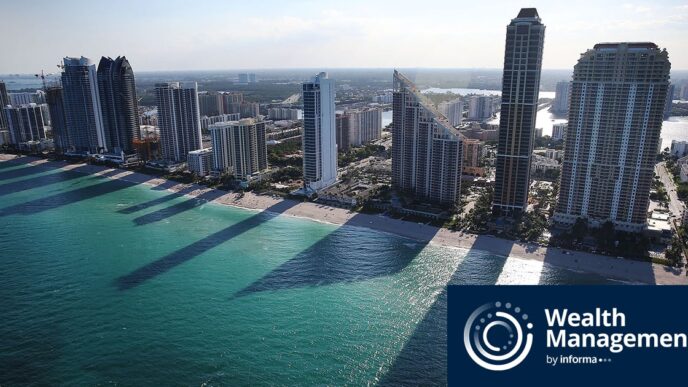

Miami has transformed into America’s most coveted destination for wealthy individuals seeking tax relief and luxurious coastal living. However, as billionaires snap up multimillion-dollar waterfront estates, real estate experts warn that middle-class families hoping to follow this trend face an increasingly impossible challenge in the South Florida housing market.
The migration of affluent Americans to the Sunshine State has reached unprecedented levels. According to a Realtor.com analysis of IRS migration data, Florida attracted more wealth from domestic movers than any other state in 2023. These newcomers weren’t just comfortable—they were among the nation’s highest earners, with an average annual income of $122,530, nearly double the national average salary of $64,505.
The Billionaire Effect on South Florida Real Estate
The arrival of ultra-wealthy individuals in Miami has been nothing short of transformative. When Citadel CEO Ken Griffin purchased a record-breaking $106.9 million waterfront mansion in Coconut Grove, it signaled an explosive wave of wealth migration to the area. This transaction marked the first time a Miami home sold for more than $100 million, setting a new benchmark for luxury real estate in the region.
Other tech titans and business moguls, including Amazon founder Jeff Bezos and former Google CEO Eric Schmidt, have also chosen Florida as their home base. The appeal is clear: no state income tax, year-round sunshine, and access to trophy beachside properties that serve as both residences and status symbols.
“You’ve got a wealth migration coming to South Florida that’s unprecedented, and they’re coming from all four corners of the United States. We barely have enough housing to meet the middle and upper-middle classes moving here, but you also have this wealth migration that’s causing prices on the water to hit levels that are completely unpredictable.”
These words from Craig Studnicky, CEO of South Florida luxury real estate firm ISG World, paint a stark picture of the current market dynamics affecting everyday homebuyers in the region.
The Harsh Reality for Middle-Class Homebuyers
The numbers reveal why Miami has become increasingly out of reach for average Americans. According to real estate brokerage Redfin, purchasing a home in the coastal city now costs approximately $652,110 on average—significantly higher than the national median sales price of $398,771. To afford a typical Miami mortgage, buyers need an annual income between $160,000 and $215,000.
This income requirement effectively prices out 80% to 85% of Americans from the Miami housing market. The situation is particularly dire when examining available inventory:
- Homes priced below $400,000 represent just 2% of active single-family listings in Miami-Dade County as of early 2025
- Properties priced at $1 million or more make up 42% of all listings
- Only 14% of renter households in Southeast Florida can actually afford to purchase a single-family home or condo
- Charter schools and private schools are running out of available seats, with some families waiting over a year for enrollment
Ryan McKeveny, managing director of equity research at U.S. housing consultancy Zelman, offers a nuanced perspective. He argues that the migration of billionaires hasn’t meaningfully raised home prices for average buyers. Instead, the affordability crisis stems from a chronic shortage of homes, years of under-building, and relentless demand from buyers across all income levels.
Structural Challenges Compounding the Crisis
Beyond simple supply and demand, Florida’s strict condo safety regulations have further tightened the housing market. Following the tragic 2021 collapse of Champlain Towers South, the state passed legislation requiring more rigorous structural inspections for condominium and cooperative buildings that are three stories or higher and have reached 30 years of age.
While these safety measures are essential for protecting residents, they have added another layer of complexity to an already strained market. Many older, more affordable condo buildings now face expensive repairs and assessments, potentially removing them from the pool of budget-friendly options.
For Latino families and other middle-class Americans dreaming of Miami’s beaches and opportunities, the path to homeownership in South Florida has become increasingly narrow. As wealth continues to pour into the region, the gap between those who can afford the Miami lifestyle and those who cannot grows wider with each passing year. The city that once represented possibility and reinvention now stands as a symbol of America’s growing housing inequality.