President Donald Trump and Iranian President Masoud Pezeshkian digitally signed a 14-point memorandum of understanding on June 17, 2026, setting a framework to end the ongoing U.S.-Iran war. The Trump Iran agreement, reached during the G7 summit in Évian-les-Bains, France, includes provisions for reopening the Strait of Hormuz and U.S. sanctions relief for Iran.
The digital signing follows an earlier agreement signed on June 14, 2026, by Vice President JD Vance and Iranian Parliament Speaker Mohammad Bagher Ghalibaf. A formal signing ceremony is expected to take place in Switzerland on Friday, June 19, 2026. The memorandum establishes a 60-day deadline to reach a final agreement, though Trump indicated this timeline is not firm.
Main Developments at the G7 Summit
The G7 leaders issued a joint statement pledging renewed support for Ukraine and increased pressure on Russia’s economy through tougher sanctions. This development is significant as Trump signed on to the collective statement supporting Ukraine.
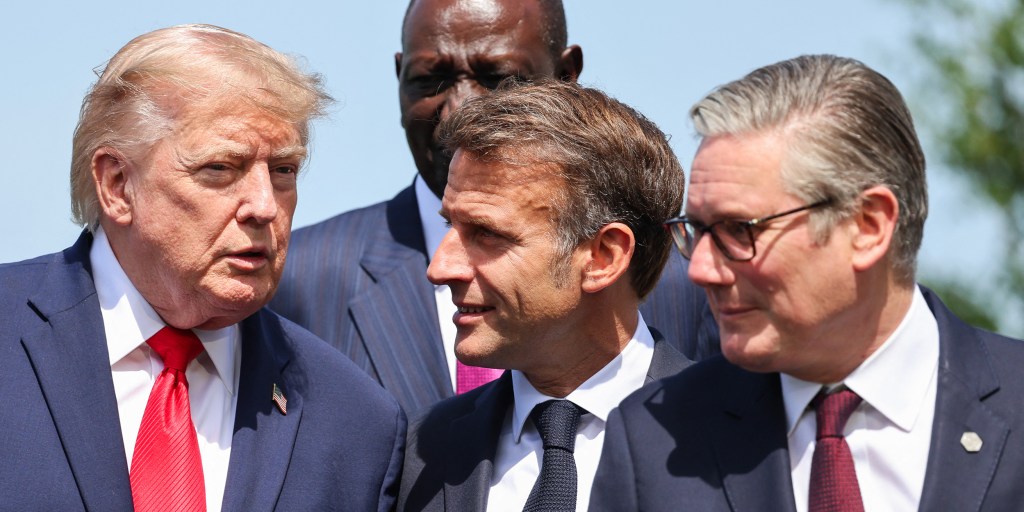
During the summit, Trump met with Indian Prime Minister Narendra Modi and Egyptian President Abdel Fattah El-Sisi. Canadian Prime Minister Mark Carney presented Trump with a birthday gift for his 80th birthday.
NATO Secretary-General Mark Rutte commented on the Iran agreement, stating that the restoration of free passage through the Strait of Hormuz will be a massive step forward.
Trump also discussed Ukraine peace efforts, having communicated with both Russian President Vladimir Putin and Ukrainian President Volodymyr Zelenskyy.
What We Know So Far
The 14-point memorandum of understanding between the United States and Iran was digitally signed on June 17, 2026. The agreement includes provisions for reopening the Strait of Hormuz and sanctions relief for Iran, though specific details of the sanctions relief have not been publicly confirmed.
The full text of the memorandum has not been publicly released. Reports mention a $300 billion redevelopment fund for Iran, though this figure remains disputed and the source of funding has not been confirmed.
The agreement follows months of conflict, including an Iran school strike on February 28, 2026, that killed over 170 people, mostly children. Senator Peter Welch estimated U.S. spending on the war at $100 billion. A U.S. military strike on a tanker killed three Indian sailors during the conflict.
Democratic Criticism and Trump’s Defense
Senate Democrats sharply criticized the Iran deal. Senate Minority Leader Chuck Schumer called it one of the biggest American disasters, saying Trump started this war, did not know how to finish it, and has capitulated to the Iranians.
Senators Mark Warner of Virginia and Richard Blumenthal of Connecticut joined in the criticism, along with Senator Peter Welch of Vermont.
Trump defended the agreement, saying it is a very strong deal. When pressed about whether Iran would comply, Trump warned that if they do not honor the agreement, the United States would probably go back to bombing them until they honor it, adding that it is amazing what bombs can do.
Senate Majority Leader John Thune was asked why Trump would pull the rug out from under Senate Republicans. His response was simply that it was a good question.
Trump Criticizes Israel Over Lebanon Response
In a significant development, Trump criticized Israel’s handling of Hezbollah in Lebanon. He stated that Israel could do better with respect to Hezbollah, adding that when two drones are shot into the desert and dropped harmlessly, you do not have to knock down buildings in Beirut.
Trump clarified he is not saying Israel should not protect itself but called for a more measured response. U.S. Ambassador to Israel Mike Huckabee remains involved in regional diplomacy.
What Happens Next
A formal signing ceremony is expected in Switzerland on Friday, June 19, 2026. The memorandum sets a 60-day deadline to reach a final agreement, though Trump indicated this deadline is not firm.
It remains unclear whether Israel will participate in Geneva negotiations related to the agreement. Israeli Prime Minister Benjamin Netanyahu has not publicly commented on whether Israel has seen or approved the deal.
Senate Intelligence Committee Chairman Tom Cotton and other Republican leaders continue to monitor the agreement’s implementation.
Other Developments From the Summit
Trump canceled Jay Clayton’s confirmation hearing for Director of National Intelligence. Bill Pulte currently serves as Acting Intelligence Director.
FBI Director Kash Patel posted details about a foiled plot to attack UFC fights at the White House. More than two dozen people were reportedly involved in the plot, though specific suspects arrested have not been identified.
A federal judge ordered the Trump administration to draft plans for the Kennedy Center to remain open.
Related Domestic Developments
The Federal Reserve under new chairman Kevin Warsh met on interest rates amid rising inflation concerns. The Supreme Court has 20 cases remaining in its current term, with its 6-3 conservative majority.
Reagan National Airport will halt flights after noon on July 4, 2026, with restrictions also affecting July 3, 2026.
New Mexico’s Attorney General sent preservation letters for Jeffrey Epstein records to banks and companies.
Georgia Republicans backtracked on redistricting plans. Jackson Lahmeyer, an Oklahoma pastor and candidate, dropped out of the Oklahoma House race after Trump withdrew his endorsement.
A new rule is estimated to decrease ACA enrollees by 1.2 to 2 million people.
Former Secretary of State Hillary Clinton commented on President Biden, saying he made a terrible mistake for himself, his legacy and for the country.
Frequently Asked Questions
What did Trump and Iran agree to?
Trump and Iranian President Pezeshkian digitally signed a 14-point memorandum of understanding that includes reopening the Strait of Hormuz and U.S. sanctions relief for Iran. The full text has not been publicly released.
When will the final agreement be signed?
A formal signing ceremony is expected in Switzerland on Friday, June 19, 2026. The memorandum establishes a 60-day deadline to reach a final agreement.
Has the U.S.-Iran war officially ended?
The memorandum of understanding sets a framework for ending the conflict, but a final agreement has not yet been reached. The 60-day timeline for negotiations is not considered a firm deadline.
What did G7 leaders say about Ukraine?
G7 leaders issued a joint statement pledging renewed support for Ukraine and increased pressure on Russia’s economy through tougher sanctions. Trump signed on to this collective statement.
The developments at the G7 summit mark a significant moment in U.S. foreign policy, with the Iran memorandum and the joint Ukraine statement representing major diplomatic moves. Further details about the Iran agreement are expected as negotiations continue toward a final deal within the established 60-day framework.