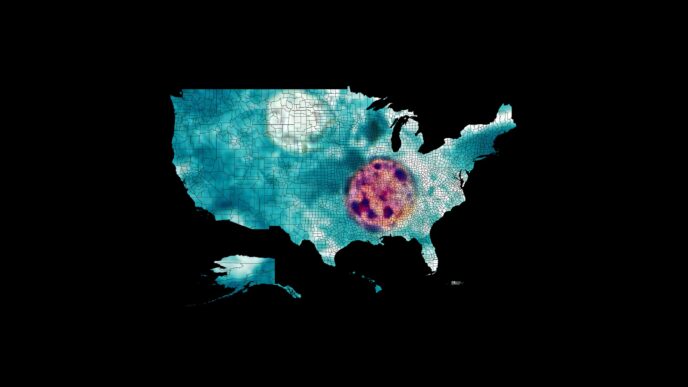

The recent cyclosporiasis outbreak in the United States has once again focused attention on food safety and the risks associated with consuming leafy green vegetables. Since May, the Centers for Disease Control and Prevention (CDC) have registered more than 11,000 cases across 41 states, while investigations point to iceberg lettuce as one of the foods linked to the spread of the parasite.
Although health authorities are continuing their investigations to determine the precise source of the contamination, specialists note that this type of produce has been linked in the past to outbreaks caused by bacteria and parasites capable of causing gastrointestinal illnesses.
Cyclosporiasis outbreak highlights lettuce’s vulnerability
Agricultural production presents conditions that favor the exposure of crops to various contaminants. Because lettuce grows outdoors, contact with soil, irrigation water, or even dust can facilitate the introduction of microorganisms capable of affecting health.
In the case of Escherichia coli and Salmonella bacteria, contamination usually originates from animal waste, while the Cyclospora parasite comes from human waste. When these substances reach water sources or farmland, there is a possibility that the microorganisms will contaminate food before harvest.
See also: Light Flip champions disconnection from smartphones
The very structure of some varieties also plays a role. The leaves have folds and cavities where pathogens can remain attached, especially when the surface has small tears or natural damage.
Another factor that increases the risk lies in the usual way of consuming lettuce. Lettuce is often part of salads and other dishes that are not cooked, thus eliminating one of the main barriers capable of removing microorganisms before reaching the table.
Contamination can also occur after harvest
The risks don’t end when the product leaves the field. During the washing, cutting, packaging, and distribution stages, cross-contamination can also occur if machinery, surfaces, or utensils retain contaminated residue.
Food safety specialists point out that some bacteria, such as Listeria monocytogenes, have a high capacity to adhere to processing equipment, making it essential to maintain strict cleaning and disinfection protocols.
If a contaminated batch comes into contact with other products during processing, the spread can occur rapidly and affect large production volumes before authorities detect the problem.
This year’s cyclosporiasis outbreak demonstrates the importance of strengthening surveillance throughout the food chain, from cultivation to distribution. It also underscores that prevention depends on good agricultural practices, ongoing sanitary controls, and traceability systems that allow for identifying the source of any contamination before it affects a larger number of consumers.