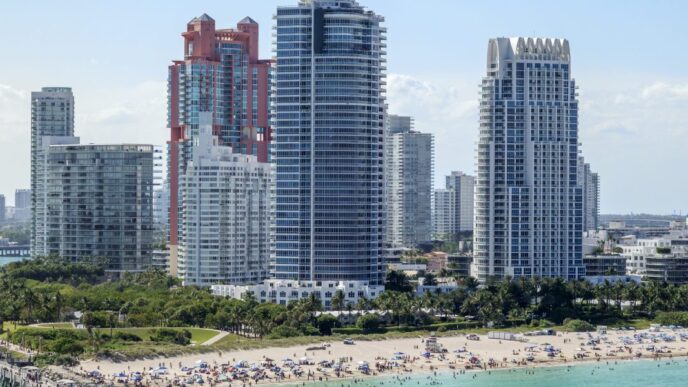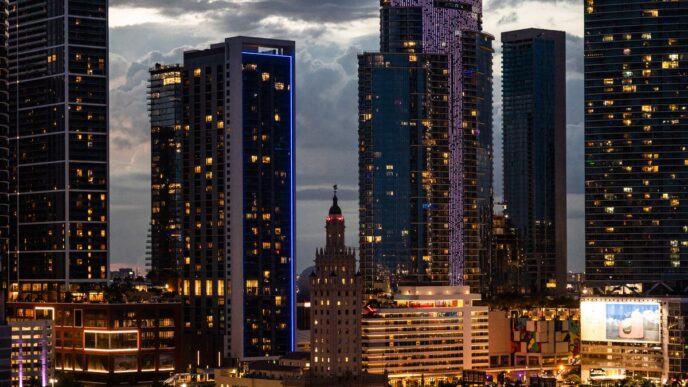

In a striking economic shift that is sending shockwaves through South Florida’s diverse communities, Miami has officially dethroned New York City as the most expensive metropolitan area in the United States. The Bureau of Economic Analysis released regional price comparison data on July 22, 2026, confirming what many residents have long suspected: the Magic City has become extraordinarily costly for working families.
The findings reveal that the Miami-Fort Lauderdale-West Palm Beach metropolitan statistical area now carries an “all items regional price parity” of 114.155, surpassing the New York-Newark-Jersey City area’s value of 112.563. These figures indicate that prices in Miami are now more than 14% above the national average, creating unprecedented financial pressure on households across the region.
Breaking Down the Numbers: What It Costs to Survive in Miami
According to United Way’s household survival budget analysis, a single adult living in Miami-Dade County faced staggering monthly expenses in 2024. The breakdown paints a sobering picture of what it takes simply to get by in America’s new most expensive city:
- Housing: $1,892 per month
- Food: $549 per month
- Transportation: $424 per month
- Healthcare: $189 per month
- Total monthly budget for basic survival: $3,982
These figures translate to a required hourly wage of $23.89 for a single adult just to cover fundamental necessities. For families with children, the costs escalate dramatically when factoring in childcare expenses, larger food budgets, and increased transportation needs. This survival budget notably excludes any provisions for emergency savings, retirement contributions, or college funds.
Miami-Dade Families Struggling to Make Ends Meet
The 2026 State of ALICE in Florida report, which analyzed 2024 data, revealed deeply troubling trends for Miami-Dade County residents. ALICE, an acronym for Asset-Limited, Income Constrained, Employed, represents households earning above the federal poverty level but falling short of meeting basic living costs.
“ALICE households earn more than the federal poverty level, but less than the basic cost of living for the county. These are the working families who struggle every month to afford housing, food, healthcare, and transportation despite being employed.”
The statistics are alarming: 408,619 households in Miami-Dade County qualified as ALICE in 2024, a significant increase from 381,666 the previous year. Meanwhile, 155,328 households were classified as living in poverty, up from 145,803 in 2023. Combined, these figures mean that a staggering 56% of Miami-Dade households are financially struggling.
Miami-Dade County’s situation is notably worse than the state average. Forty-one percent of county households are ALICE households, compared to Florida’s average of 34%. Additionally, 15% live in poverty versus the statewide average of 12%. The federal poverty level of $15,060 for a single adult and $31,200 for a family of four falls dramatically short of actual living costs in every Florida county.
Stark Disparities Across Miami Neighborhoods
The financial burden is not distributed evenly across Miami-Dade County. Significant variation exists among different ZIP codes, highlighting the region’s profound economic inequality. In areas like ZIP code 33142, which serves parts of Brownsville, and ZIP code 33128, encompassing portions of Downtown Miami, a shocking 83% of households fall below the ALICE threshold.
In stark contrast, wealthier enclaves like ZIP code 33158 in Deering Bay see only 15% of households struggling financially. This disparity of nearly 70 percentage points within the same county underscores the deeply uneven economic landscape that defines modern Miami.
For the Latino community, which comprises a majority of Miami-Dade’s population, these rising costs create particular hardships. Many immigrant families working in service industries, construction, and hospitality find themselves priced out of neighborhoods they have called home for generations. The dream of homeownership grows increasingly distant as rental costs consume ever-larger portions of household income.
As Miami continues its transformation into a hub for finance, technology, and luxury real estate, local advocates are calling for policy interventions to protect working-class families from displacement. Without significant action on affordable housing and wage increases, the city risks losing the cultural diversity and workforce that have long defined its character.