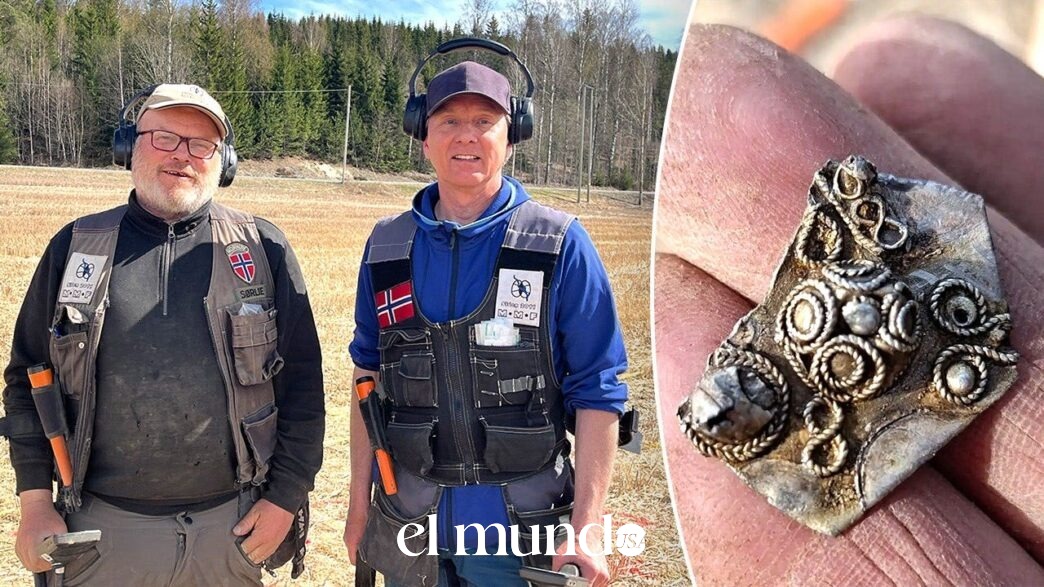
Two hobbyist treasure hunters have discovered the largest Viking Age coin hoard in Norway’s history, unearthing 2,970 silver coins in a field near Rena in southeastern Norway. The University of Oslo’s Museum of Cultural History announced the find, describing it as “a coin hoard without parallel in a Norwegian context.”
The discovery was made by Rune Sætre and Vegard Sørlie approximately 18 miles north of Elverum. The coins are believed to have been buried around 1047 and were minted between the 980s and the 1040s, bearing the names of rulers including Æthelred II, Otto III, Harald Hardrada, and King Cnut.
How the Discovery Unfolded
On April 10, Sætre and Sørlie made their initial discovery of 19 silver coins in the field. The treasure hunters immediately contacted the Innlandet County Authority, following proper protocols for such findings. What began as a modest find of fewer than two dozen coins eventually revealed itself to be a massive cache containing nearly 3,000 silver pieces.
The discovery marks the largest Viking Age coin hoard found in Norway since 1950 and stands as the biggest such find in the entire history of the country. Most of the coins were minted in England or Germany, reflecting the international trade networks that existed during the Viking Age.
Historical Significance of the Find
According to researchers at the Museum of Cultural History, the hoard provides valuable insight into monetary circulation in Norway during the 11th century. Svein Gullbekk, a professor at the Museum of Cultural History, explained the historical context of the discovery.
“Foreign coinage dominates the circulation of money in Norway up until Harald Hardrada (1046–1066) established a national coinage,” Gullbekk stated. “The hoard was deposited right at the beginning of this development.”
The timing of the burial around 1047 places the hoard at a pivotal moment in Norwegian monetary history, just as the country was transitioning toward its own currency system under Harald Hardrada’s reign, which lasted from 1046 to 1066.
Connection to Regional Iron Trade
Researchers believe the substantial wealth represented by the coin hoard may be connected to the region’s booming iron trade during the Viking Age. Jostein Bergstøl, an archaeologist at the Museum of Cultural History, provided context about the area’s economic history.
“From the 900s until the late 1200s, there was enormous iron production in this area. Ore was extracted from the bogs, and the processed iron was exported to Europe,” Bergstøl explained.
This centuries-long period of iron production would have brought considerable wealth to the region, potentially explaining why such a large quantity of foreign coins ended up buried in this southeastern Norwegian field.
What We Know So Far
The confirmed details of the discovery include the total count of 2,970 silver coins, making it the largest Viking Age coin hoard ever found in Norway. The coins span a minting period of approximately six decades, from the 980s through the 1040s. The burial date is estimated at around 1047.
The coins bear the names of several rulers from the era, including English king Æthelred II, Holy Roman Emperor Otto III, Norwegian king Harald Hardrada, and King Cnut, who ruled over a North Sea empire that included England, Denmark, and Norway.
The Museum of Cultural History has confirmed the find’s authenticity and historical significance, positioning it as an internationally important discovery.
Proper Procedures Praised by Officials
Hanna Geiran, director general of the Directorate for Cultural Heritage, expressed enthusiasm about the discovery. She stated that she could “hardly believe my ears when I heard about the find.”
“This is both a national and an international event, and few things capture people’s imagination as much as the Viking Age in Norway,” Geiran said.
May-Tove Smiseth, an archaeologist with the Innlandet County Authority, praised the discoverers for their handling of the situation. “This is an exemplary case of how it should be done,” Smiseth stated.
“Sætre and Sørlie immediately got in touch and have done everything by the book, in full accordance with the Directorate for Cultural Heritage’s guidelines,” Smiseth continued. “They have been highly cooperative and have actively contributed to securing and documenting the find in the best possible way.”
What Happens Next
While the discovery has been officially announced and documented, several aspects of the find remain under investigation. Researchers continue to study the coins to learn more about their origins and the circumstances of their burial.
The exact reason why such a large amount of wealth was buried and never recovered remains unclear. Theories may emerge as archaeologists and historians examine the evidence more closely, but no definitive explanation has been confirmed.
Important Details About the Discovery
The location of the find is a field near Rena, situated in southeastern Norway approximately 18 miles north of Elverum. This region was historically significant for its iron production, which flourished from the 900s until the late 1200s.
The coins are silver, not gold, and represent wealth accumulated through trade and commerce during the Viking Age. The presence of English and German coins reflects the extensive trading networks that connected Scandinavia with the rest of Europe during this period.
The announcement from the University of Oslo’s Museum of Cultural History positions this as one of the most significant archaeological finds in recent Norwegian history.
Frequently Asked Questions
How many coins were found in the Viking hoard?
The treasure hunters discovered a total of 2,970 silver coins. The initial find on April 10 included 19 silver coins before the full extent of the cache was revealed.
Where was the Viking coin hoard discovered?
The hoard was found in a field near Rena in southeastern Norway, approximately 18 miles north of Elverum. The region was historically known for its iron production during the Viking Age.
How old are the Viking coins?
The coins were minted between the 980s and the 1040s and are believed to have been buried around 1047. They bear the names of rulers including Æthelred II, Otto III, Harald Hardrada, and King Cnut.
Why is this discovery historically significant?
This is the largest Viking Age coin hoard ever found in Norway’s history and the biggest since 1950. The Museum of Cultural History described it as “a coin hoard without parallel in a Norwegian context.”
Who discovered the Viking coin hoard?
Two hobbyist treasure hunters, Rune Sætre and Vegard Sørlie, discovered the hoard. Officials praised them for following proper procedures and immediately contacting the Innlandet County Authority.
The discovery adds to the growing body of archaeological evidence about Viking Age wealth and trade in Scandinavia. The find underscores the importance of proper reporting procedures when historical artifacts are discovered, as the cooperation between the treasure hunters and authorities allowed for thorough documentation and preservation of this unprecedented collection of Viking silver coins.