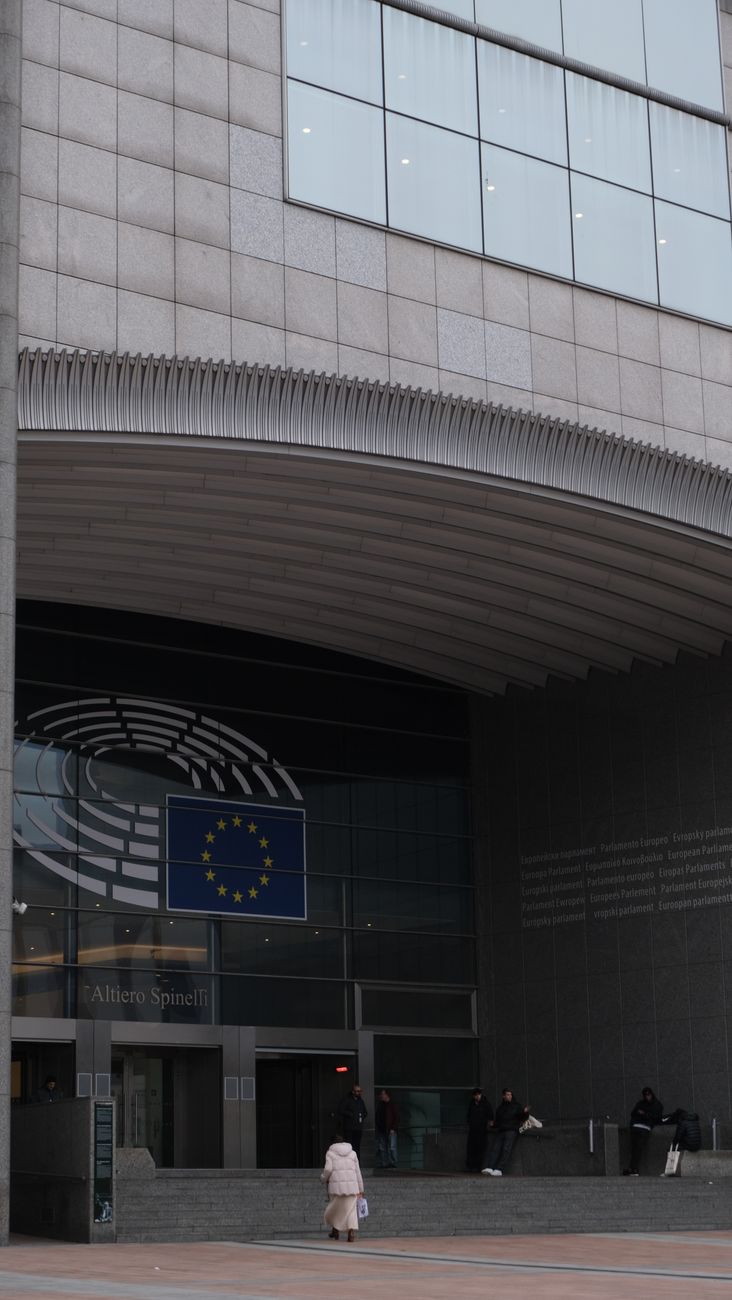
A five-member Afghan Taliban delegation held historic closed-door talks with European Union staff in Brussels on Tuesday, marking the first time representatives of the Taliban government have visited EU headquarters for diplomatic discussions. The meeting focused on deportations and consular services amid growing pressure from EU member states to address migration challenges.
The talks took place at an undisclosed location in Brussels and centered on what officials described as “dignified returns” of Afghan nationals. Human rights organizations sharply criticized the meeting, warning it could endanger Afghans both in Europe and Afghanistan while potentially legitimizing a government accused of severe human rights violations.
Main developments
Abdul Qahar Balkhi, spokesperson for the Taliban Ministry of Foreign Affairs, led the five-member delegation during the Brussels visit. Following the meeting, Balkhi characterized the visit as groundbreaking.
“This was a historic visit as first time ever that delegation from Islamic Emirate visited the E.U. and held talks with member states in Brussels,” Balkhi stated.
The Taliban delegation received 24-hour visas with limited territorial validity for the meeting. They were not granted access to the Schengen zone. Neither Belgium nor the European Union officially recognizes the Taliban government, which seized power in Afghanistan in 2021.
European Commission spokesperson Markus Lammert emphasized the limited nature of the engagement. “These are technical-level contacts. This does not mean recognition,” Lammert stated.
Belgian Foreign Minister Maxime Prévot also addressed concerns about legitimization. “Belgium cannot confer legitimacy on a regime accused of serious human rights violations,” Prévot said.
What we know so far
The Tuesday meeting in Brussels represents the second direct engagement between EU officials and Taliban representatives. The first meeting between the EU and Taliban occurred in Kabul in January. However, this marks the first time a Taliban delegation has traveled to EU territory for such discussions.
The talks come in response to pressure from a significant majority of EU member states. In October, 20 of the 27 EU member states signed a letter calling for stronger migration policies regarding Afghan nationals.
Current EU data reveals the scale of the migration challenge. Of 22,870 Afghans who have been told to return to their home country, only 2 percent have done so. Afghans represent one of the largest groups of migrants seeking asylum in the European Union.
Belgian Migration Minister Anneleen Van Bossuyt referenced the October letter and its impact on current policy discussions. “We have sent a clear and powerful message to the European Commission: we can no longer afford a standstill. It is high time for a firm and joint approach, so that Europe can regain control over migration and security,” Van Bossuyt stated.
Separately, about 3 million Afghans have returned from Pakistan and Iran in the past year, illustrating the broader regional migration dynamics affecting the Afghan population.
Human rights organizations respond
Multiple human rights organizations condemned the Brussels meeting, arguing it could endanger vulnerable populations and undermine the EU’s human rights commitments.
Fereshta Abbasi, a researcher at Human Rights Watch, warned against prioritizing deportations over protection. “Any engagement with the Taliban needs to prioritize protecting human rights and accountability — not deporting people to danger there,” Abbasi stated.
Eve Geddie, Director of Amnesty International’s European Institutions Office, invoked recent history to criticize the deportation discussions. “The desperate scenes of people — including E.U. staff — fleeing Afghanistan are a recent memory. It is unconscionable that the E.U. would now try and deport people to Afghanistan, which has only become more dangerous in the meantime,” Geddie stated.
Afghan activist and Nobel Peace Prize laureate Malala Yousafzai expressed alarm at the engagement. “Europe must not legitimise a regime responsible for one of the worst human rights crises in the world. Any engagement with the Taliban must begin and end with the rights of Afghan women and girls,” Yousafzai said, adding that she was “deeply shaken” by the talks.
Context of the meeting
The Taliban seized power in Afghanistan in 2021, now five years ago. Since then, no country has formally recognized the Taliban government. The Brussels meeting maintains this position, with EU officials characterizing the discussions as technical contacts rather than diplomatic recognition.
The meeting responds to mounting internal EU pressure regarding migration policy. With 20 member states having signed the October letter calling for stronger measures, the issue has become a priority for EU policymakers despite the human rights concerns raised by advocacy organizations.
Rights groups have argued that the closed-door nature of the talks and their focus on deportations undercuts the EU’s stated human rights obligations. They warn such engagement could endanger people both in Europe who face potential deportation and in Afghanistan where conditions remain dangerous.
What happens next
Specific outcomes or agreements from the Tuesday meeting have not been disclosed. It remains unclear which individual EU member nations participated in the discussions alongside EU staff, and the exact location of the meeting in Brussels was not revealed.
The Taliban delegation’s official response to the human rights criticism voiced by international organizations has not been reported. Given that only 2 percent of the more than 22,000 Afghans ordered to return have complied, the practical implementation of any potential deportation framework would face significant challenges.
The EU will need to balance pressure from member states demanding stronger migration controls against the human rights concerns raised by organizations like Human Rights Watch and Amnesty International. How future engagements between EU officials and Taliban representatives will proceed remains to be determined.
Important details
The Taliban delegation consisted of five members and was led by Abdul Qahar Balkhi, the spokesperson for the Taliban Ministry of Foreign Affairs. The delegation operated under highly restricted conditions during their Brussels visit.
The 24-hour visas issued to the Taliban representatives came with limited territorial validity, preventing any travel within the broader Schengen zone. This restriction underscores the EU’s cautious approach to the engagement.
Key figures involved in the discussions or commentary include Belgian Foreign Minister Maxime Prévot, Belgian Migration Minister Anneleen Van Bossuyt, and European Commission spokesperson Markus Lammert on the European side. Human rights perspectives came from Fereshta Abbasi of Human Rights Watch, Eve Geddie of Amnesty International, and Nobel laureate Malala Yousafzai.
Frequently asked questions
Does the EU recognize the Taliban government?
No. Neither the European Union nor Belgium officially recognizes the Taliban government. EU officials characterized the Brussels meeting as technical-level contacts that do not constitute recognition.
How many Afghans have been ordered to leave the EU?
According to EU data, 22,870 Afghans have been told to return to their home country. Of that number, only 2 percent have complied with the return orders.
When did the Taliban take power in Afghanistan?
The Taliban seized power in Afghanistan in 2021, five years ago. No country has formally recognized the Taliban government since then.
Was this the first meeting between the EU and Taliban?
This was the first meeting held in EU territory. A previous meeting between EU officials and Taliban representatives took place in Kabul in January.
The Brussels meeting represents a significant development in EU-Taliban engagement, though its practical implications remain unclear. The closed-door discussions have drawn sharp criticism from human rights organizations concerned about the safety of Afghans while EU member states continue to press for stronger migration policies. Officials from both the EU and Belgium have emphasized that the technical contacts do not constitute recognition of the Taliban government.